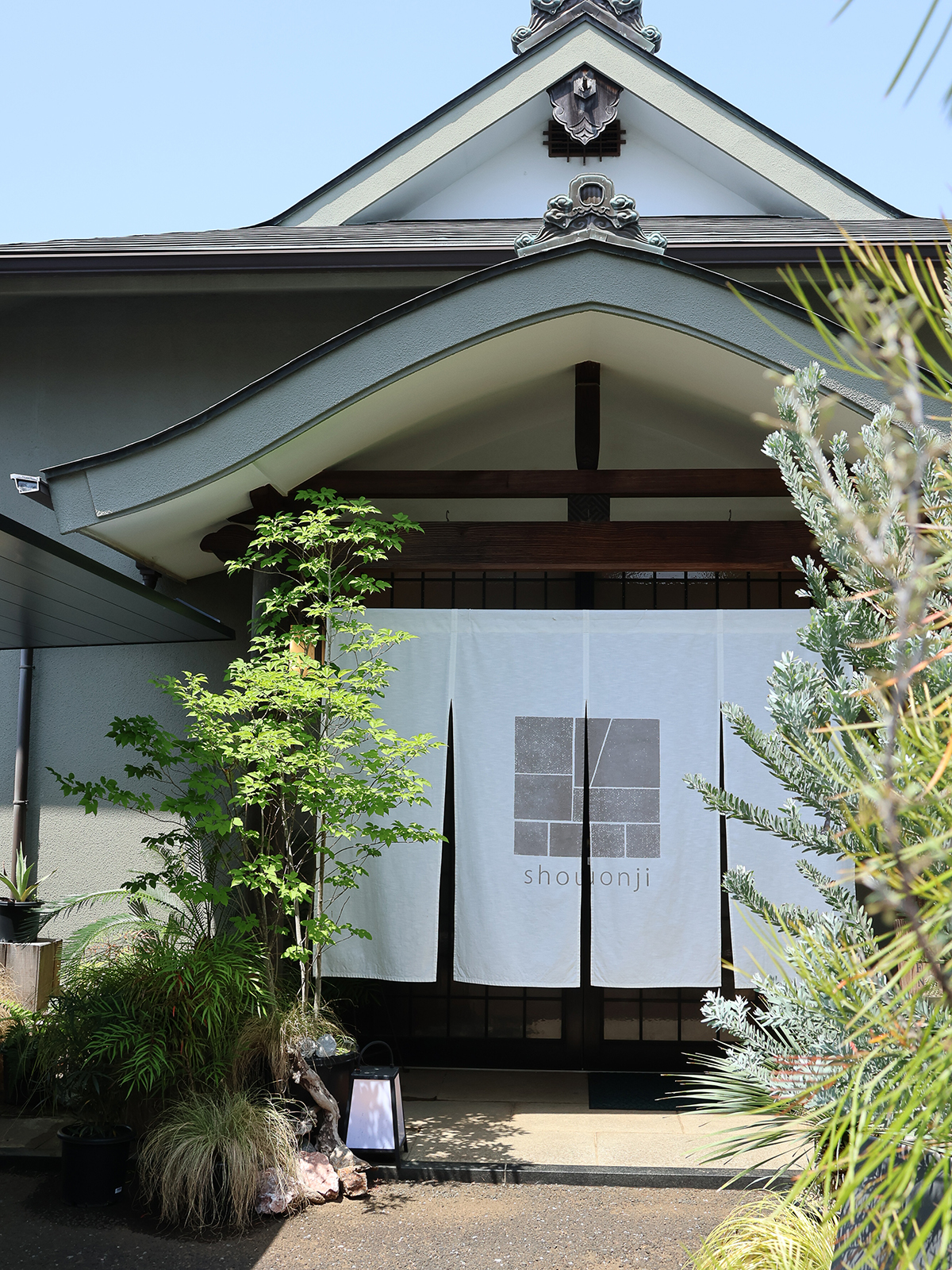
Shouonji Art Project @照恩寺 Shouonji Temple, Tokyo 2025
Carpe Diem -いまここ- Kaori Miyayama Solo Show
dialogue with Chief Priest and Chihiro Minato
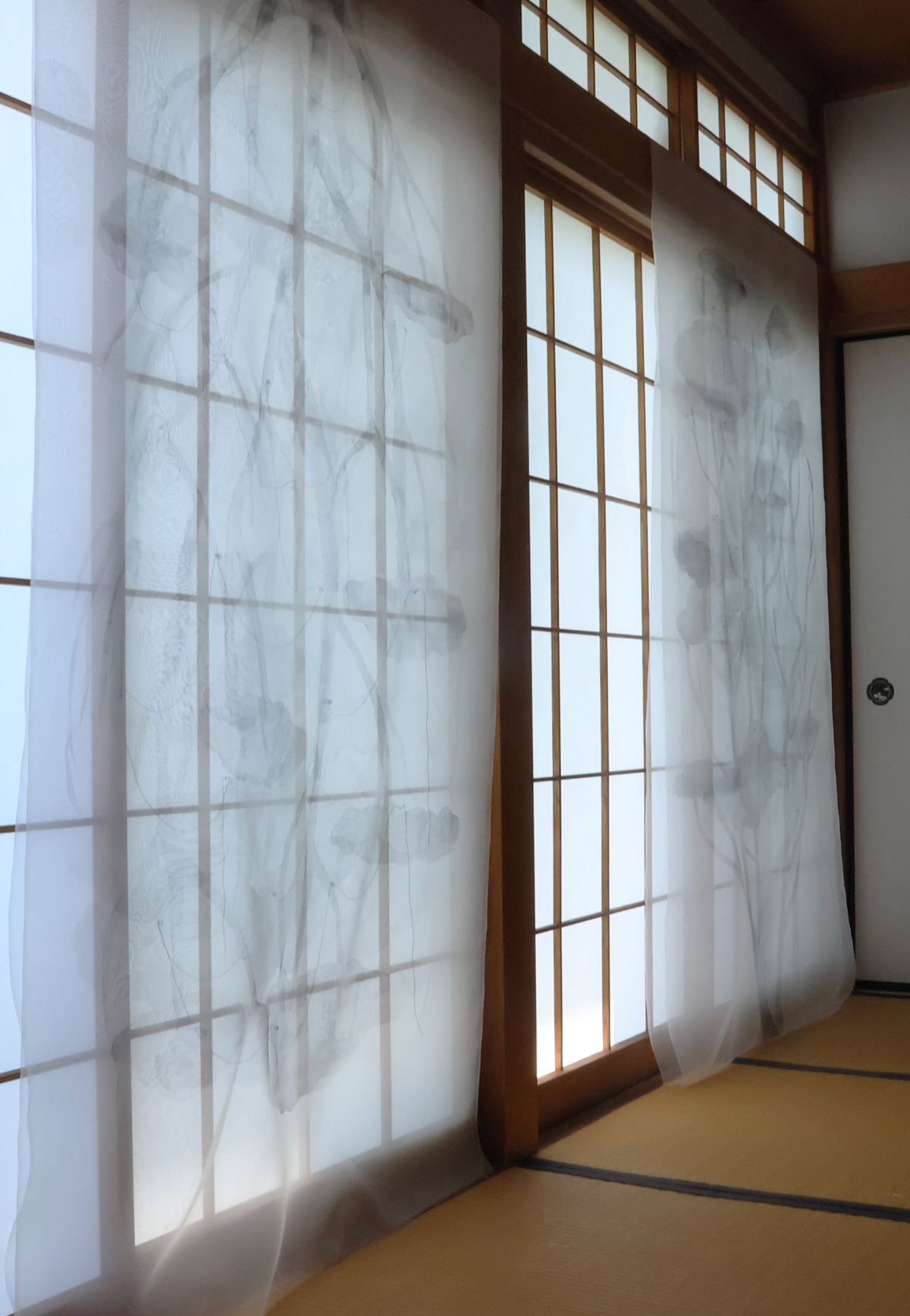
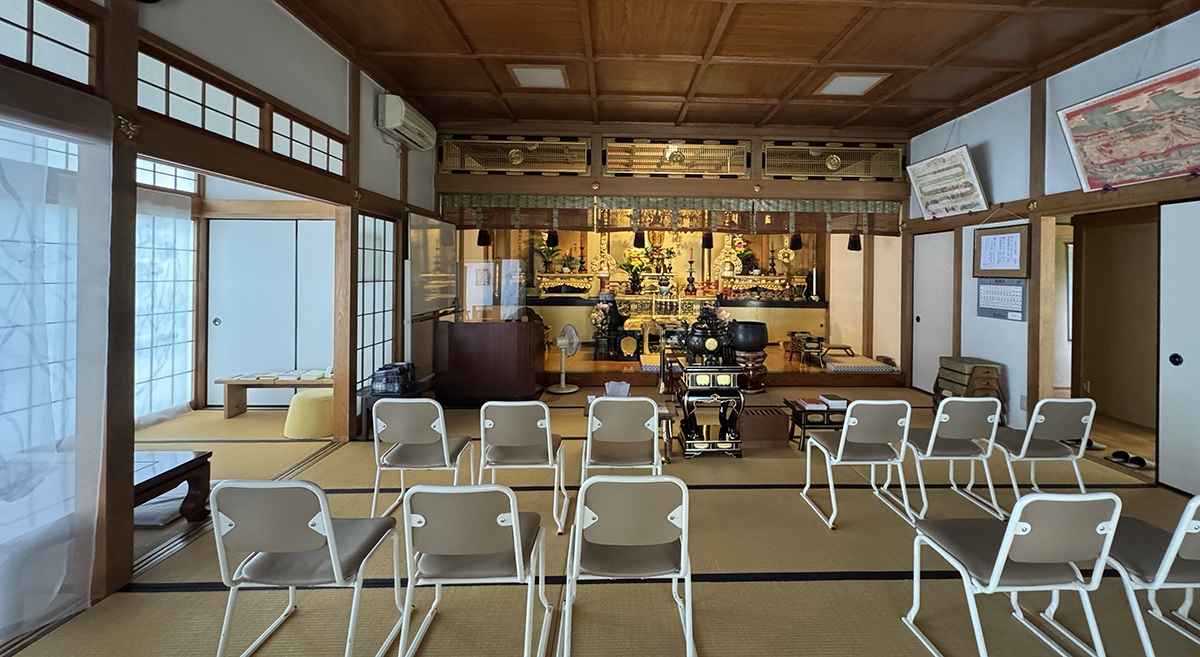
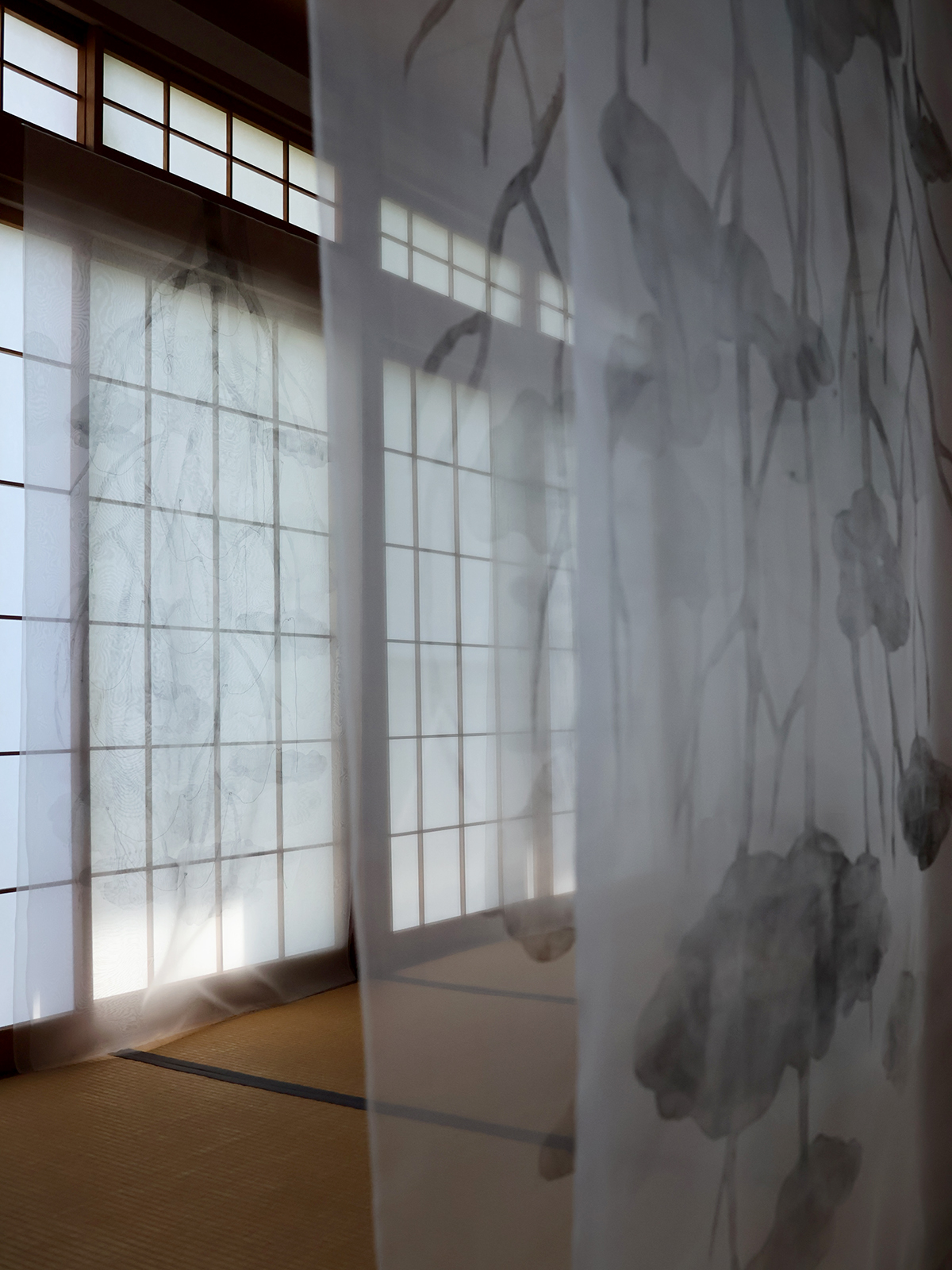
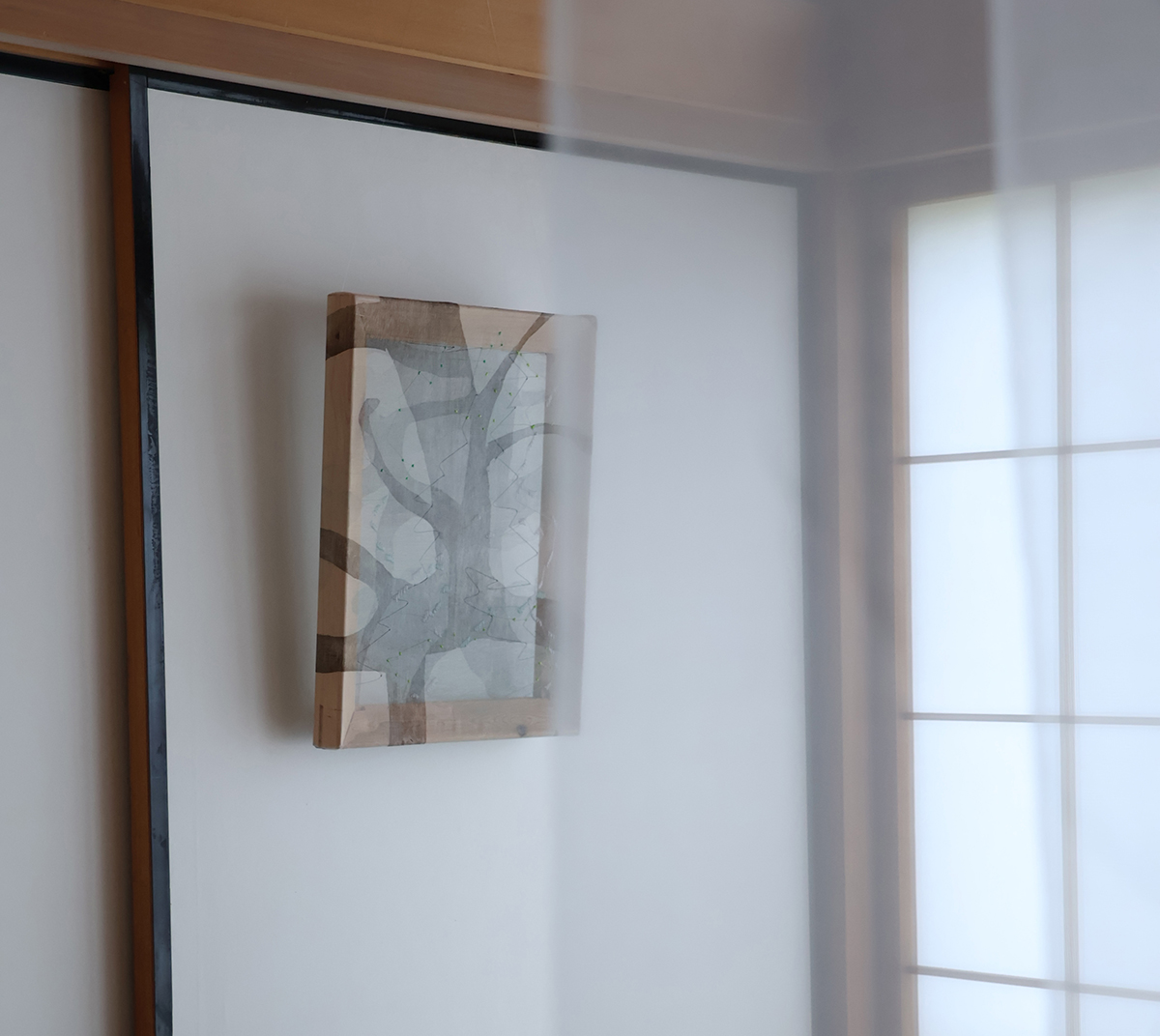
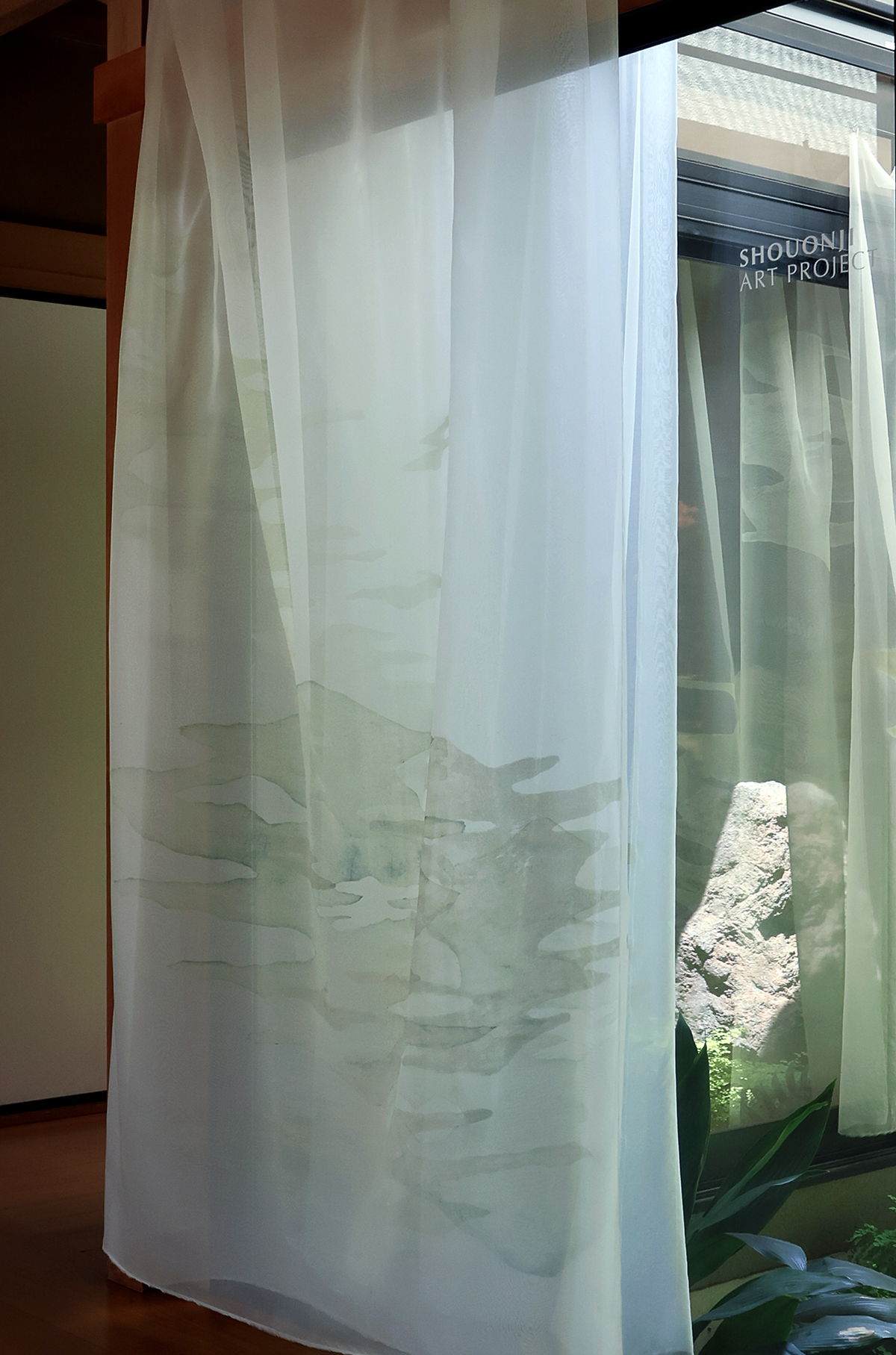
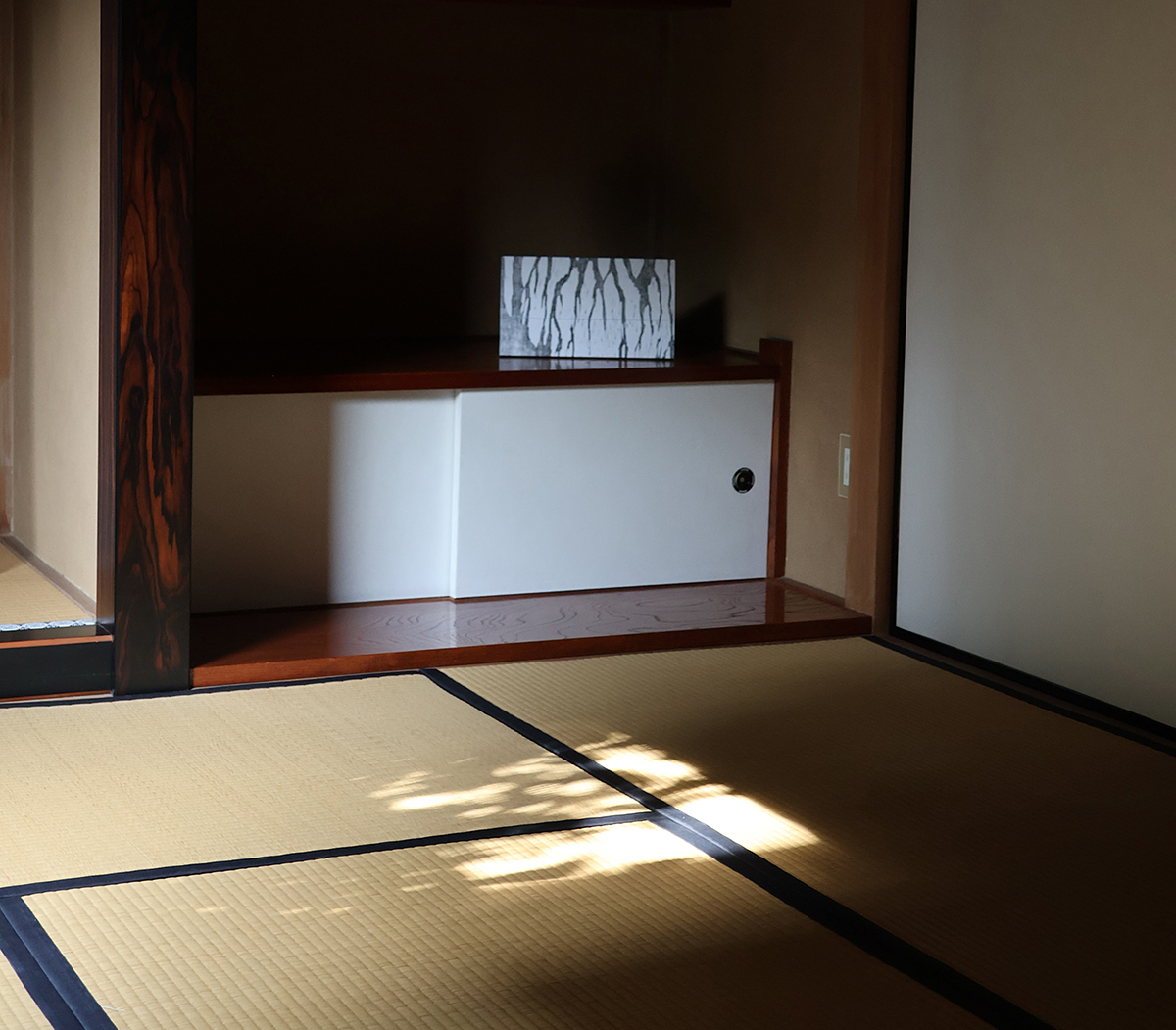
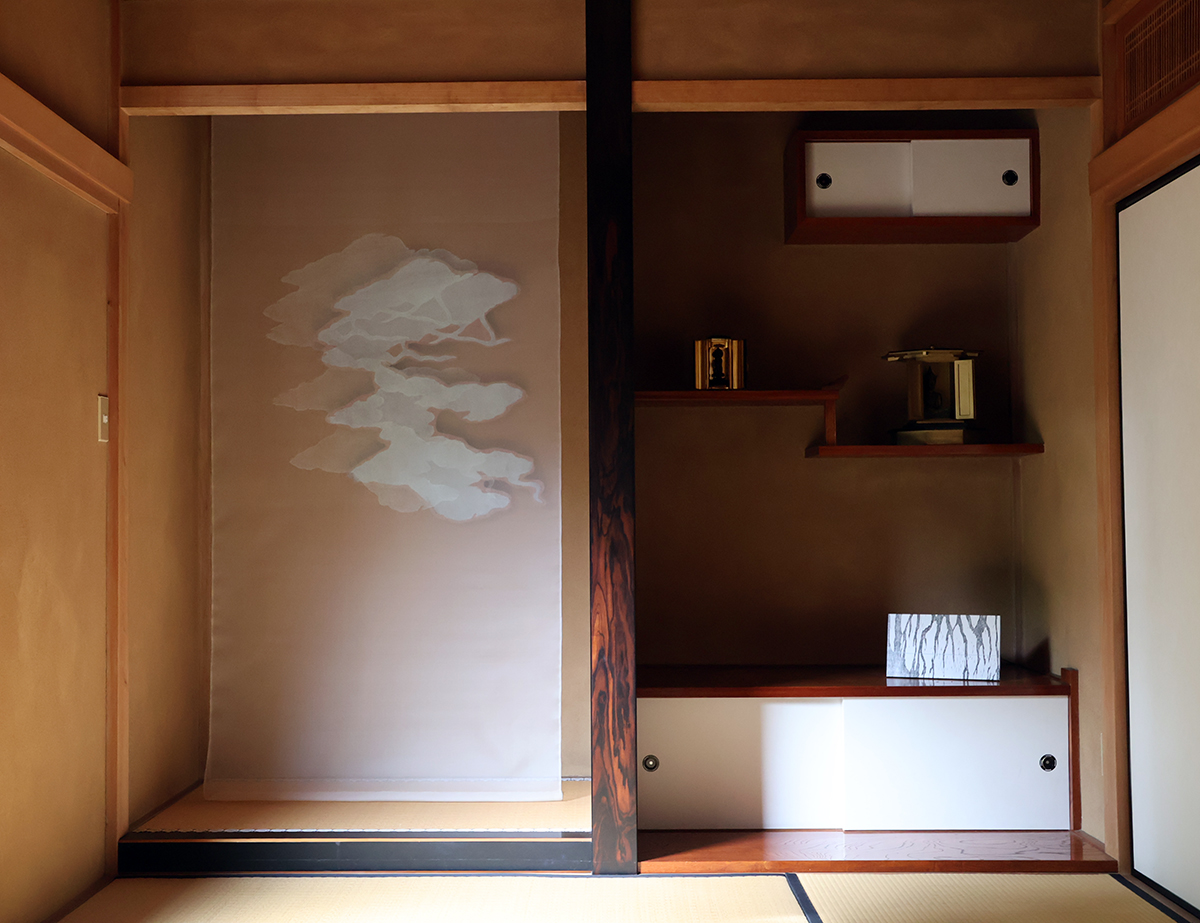
le radici del cielo
-空の根っこ-
The Roots of Heaven
2025, variable dimension
mixed media installation
woodcut and thread on silk organdy
木版、 糸、 絹オーガンジー
photo ©Mami Takahashi
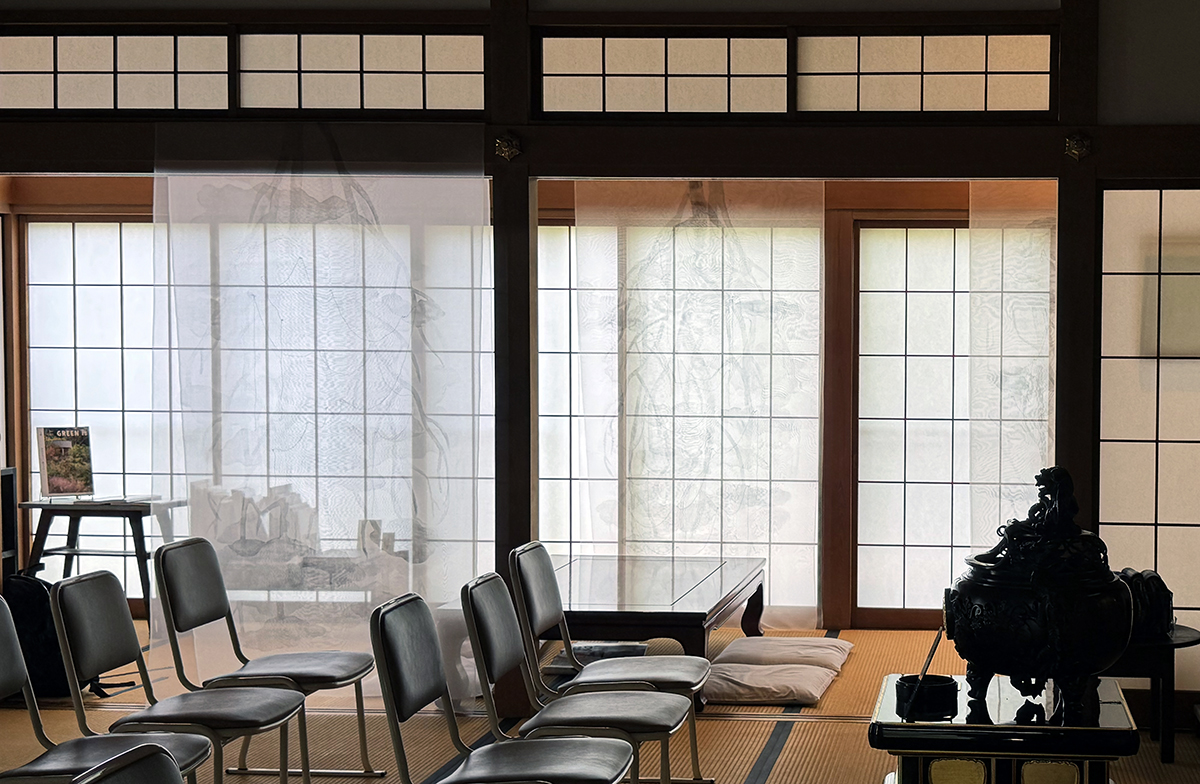
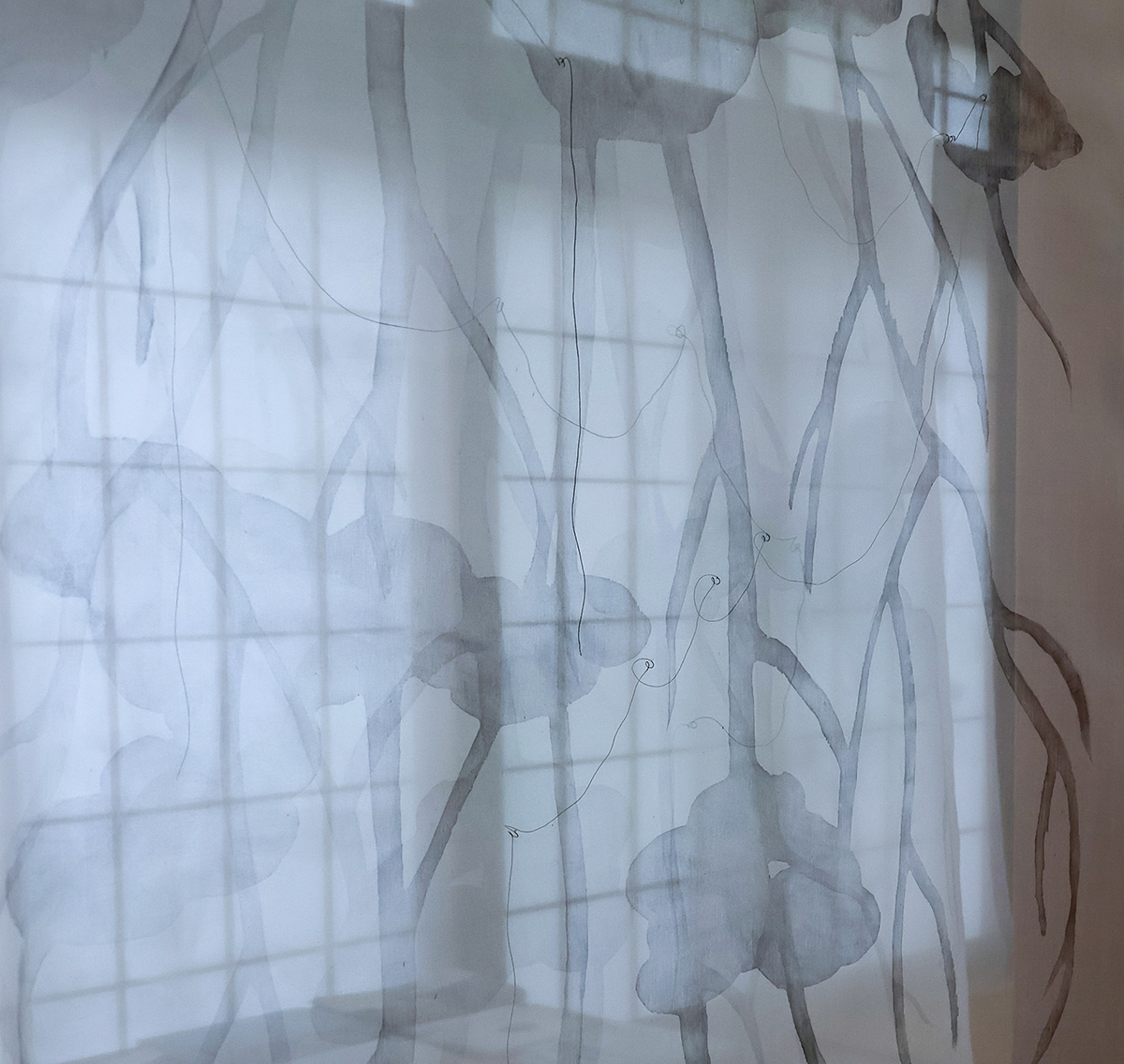
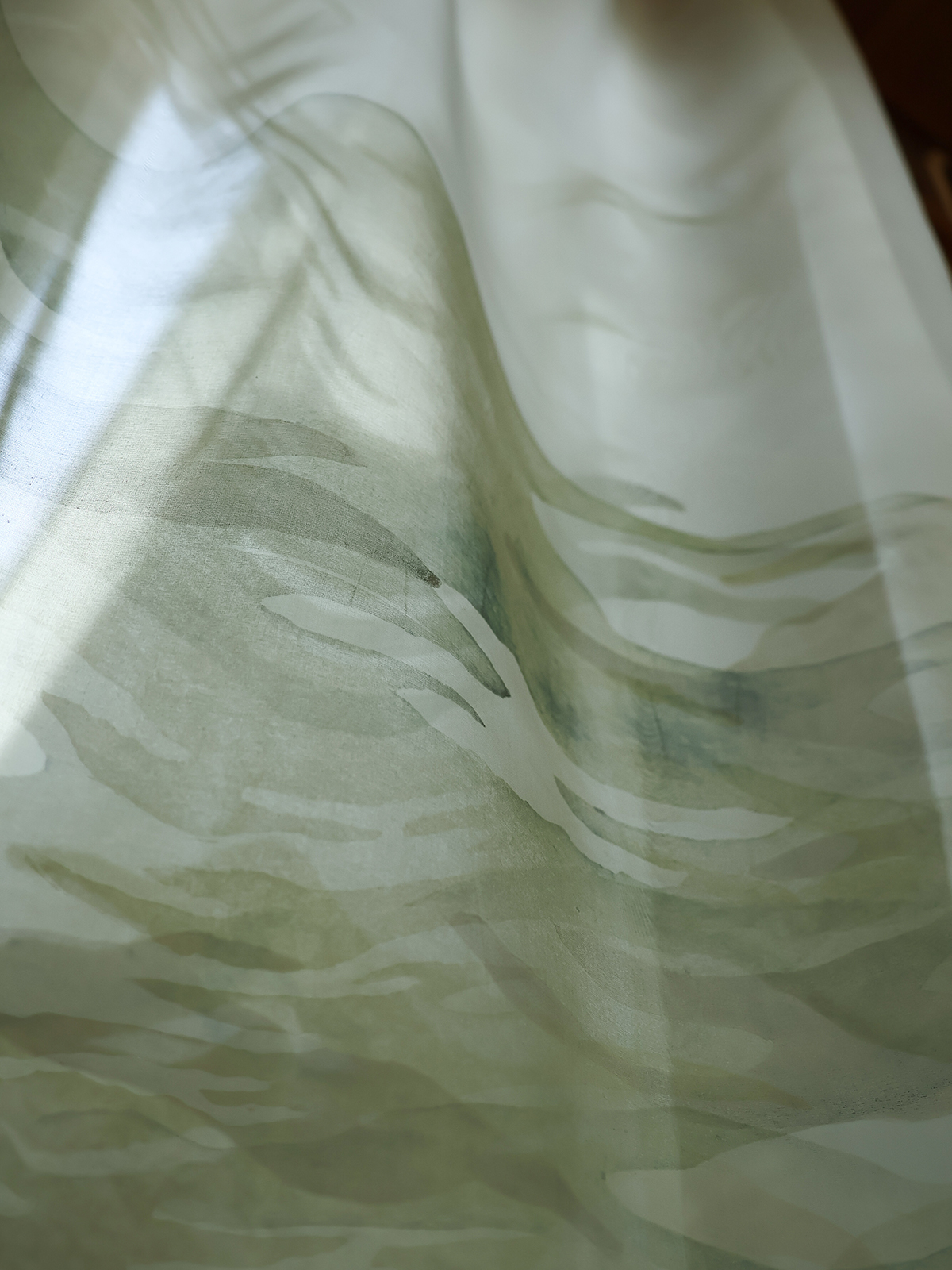
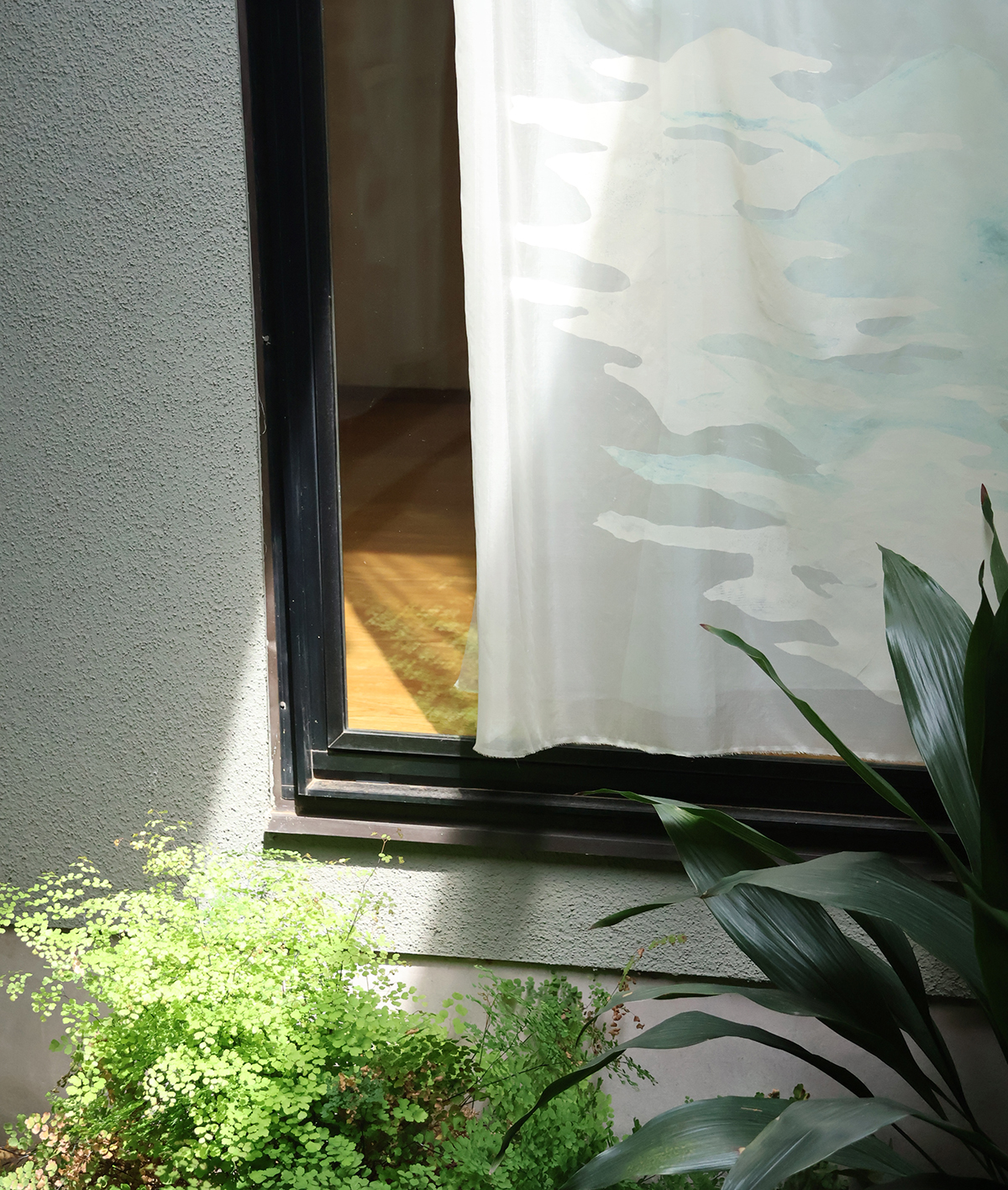
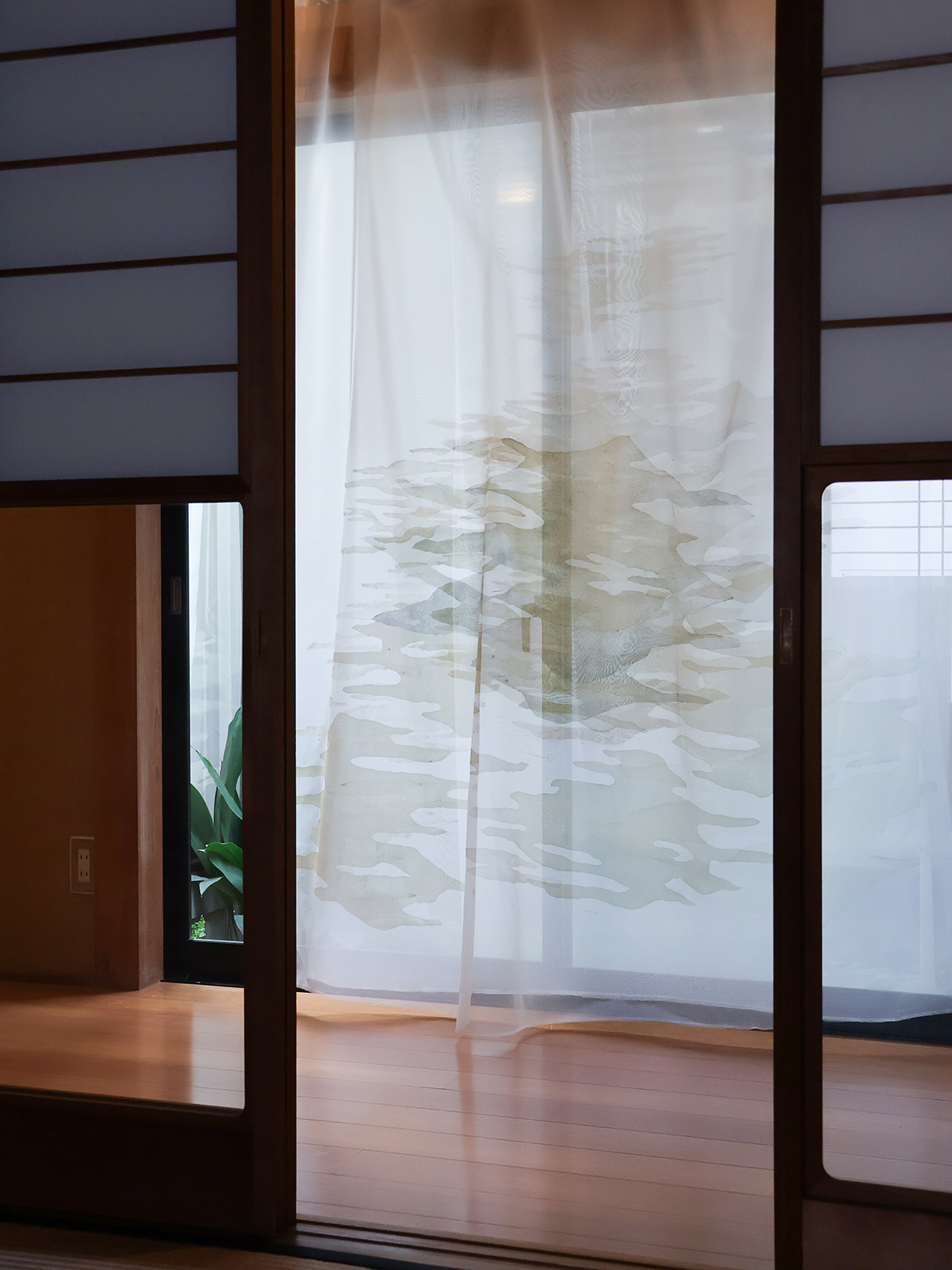
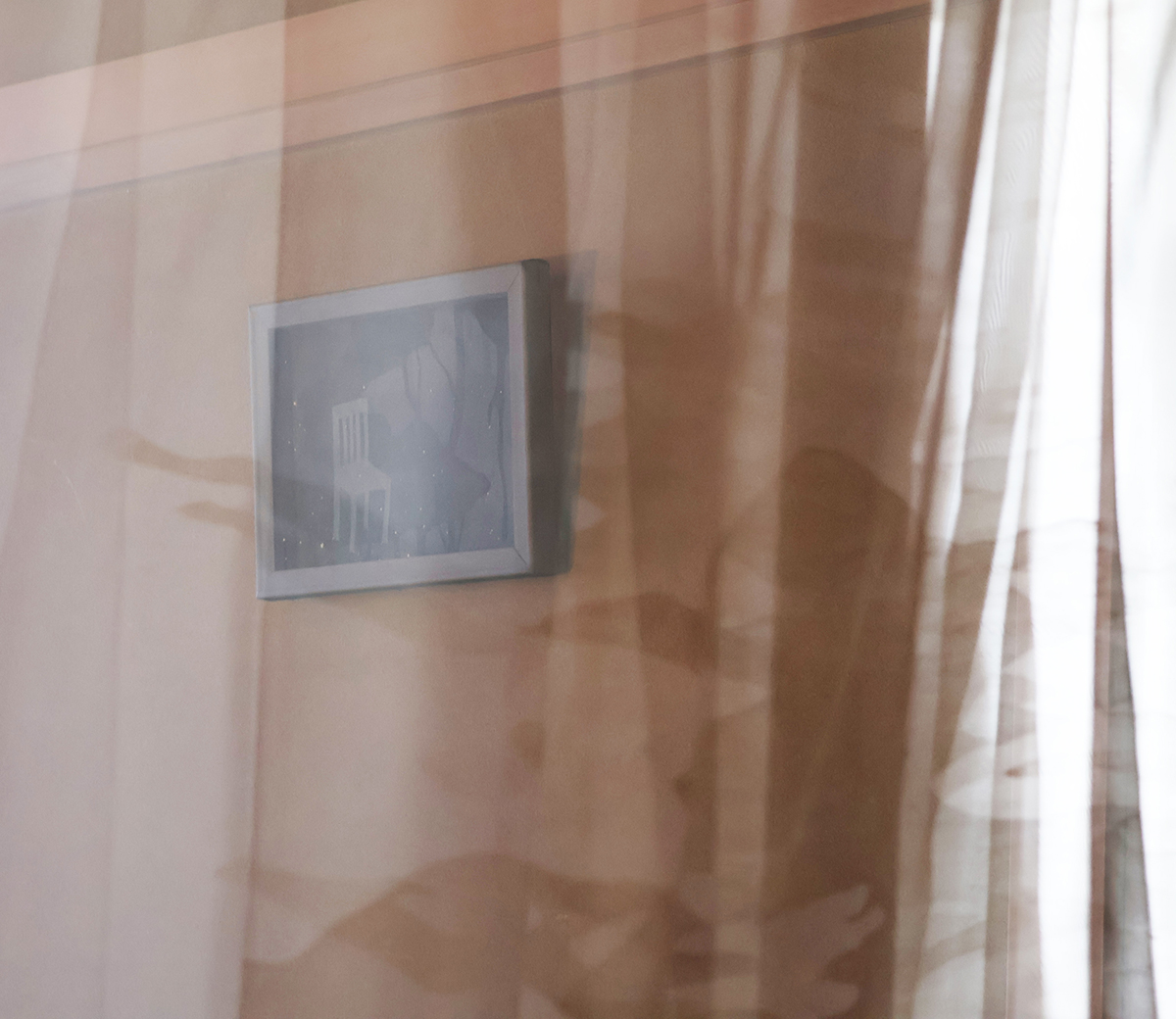
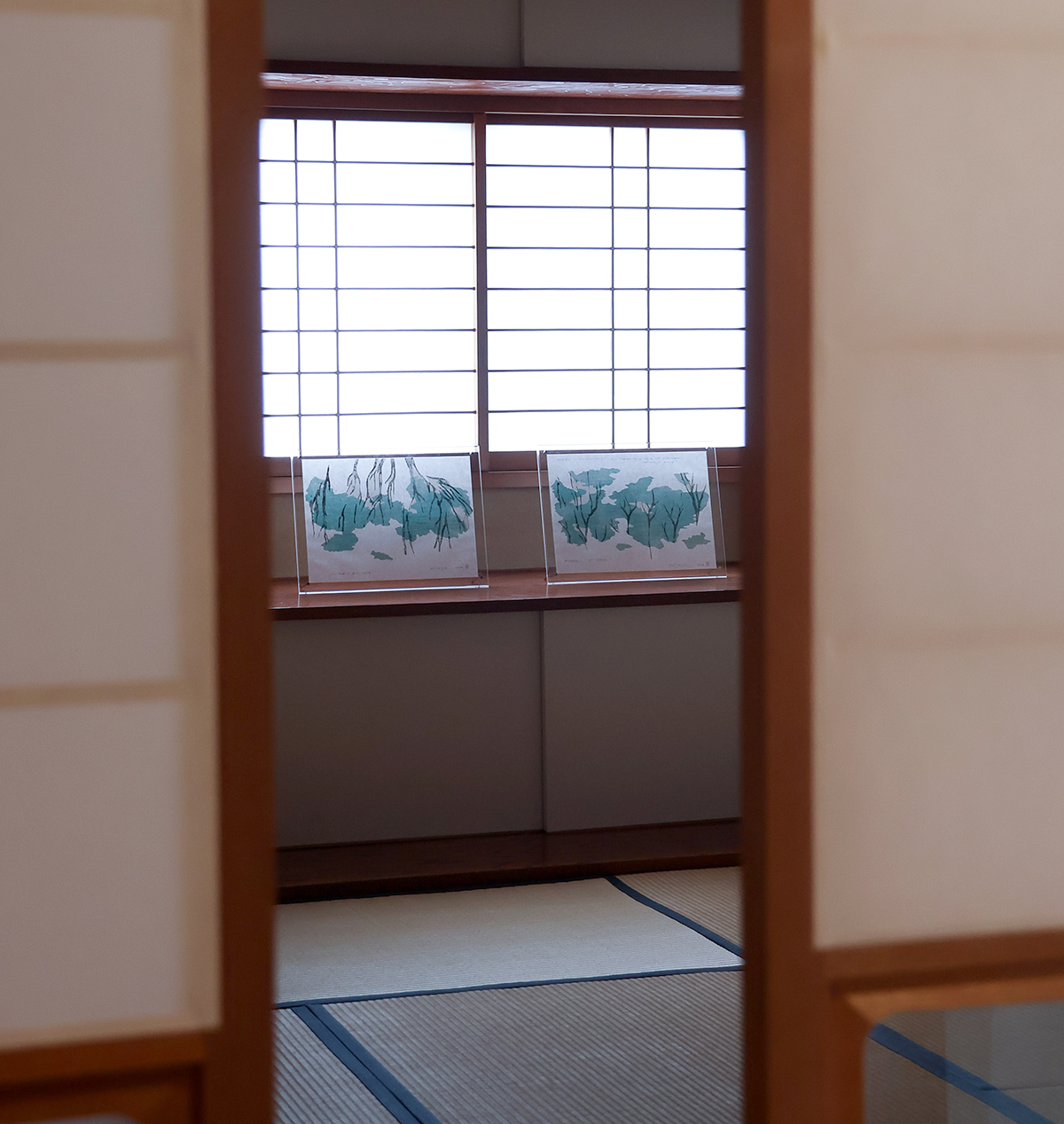
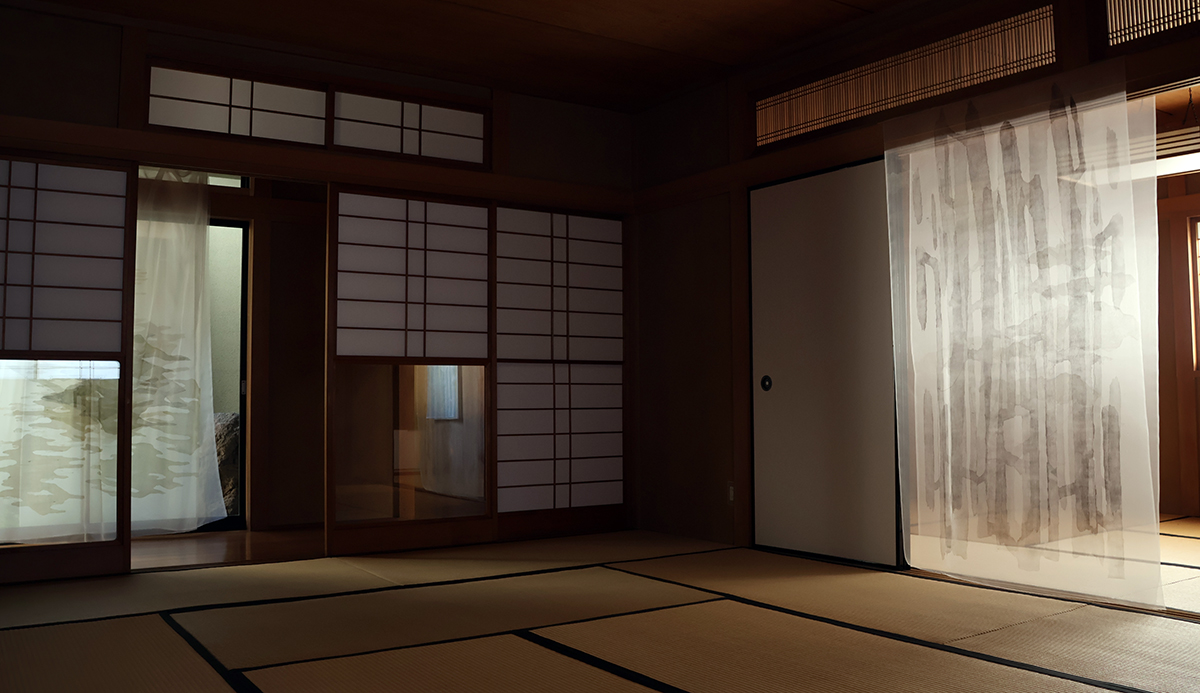
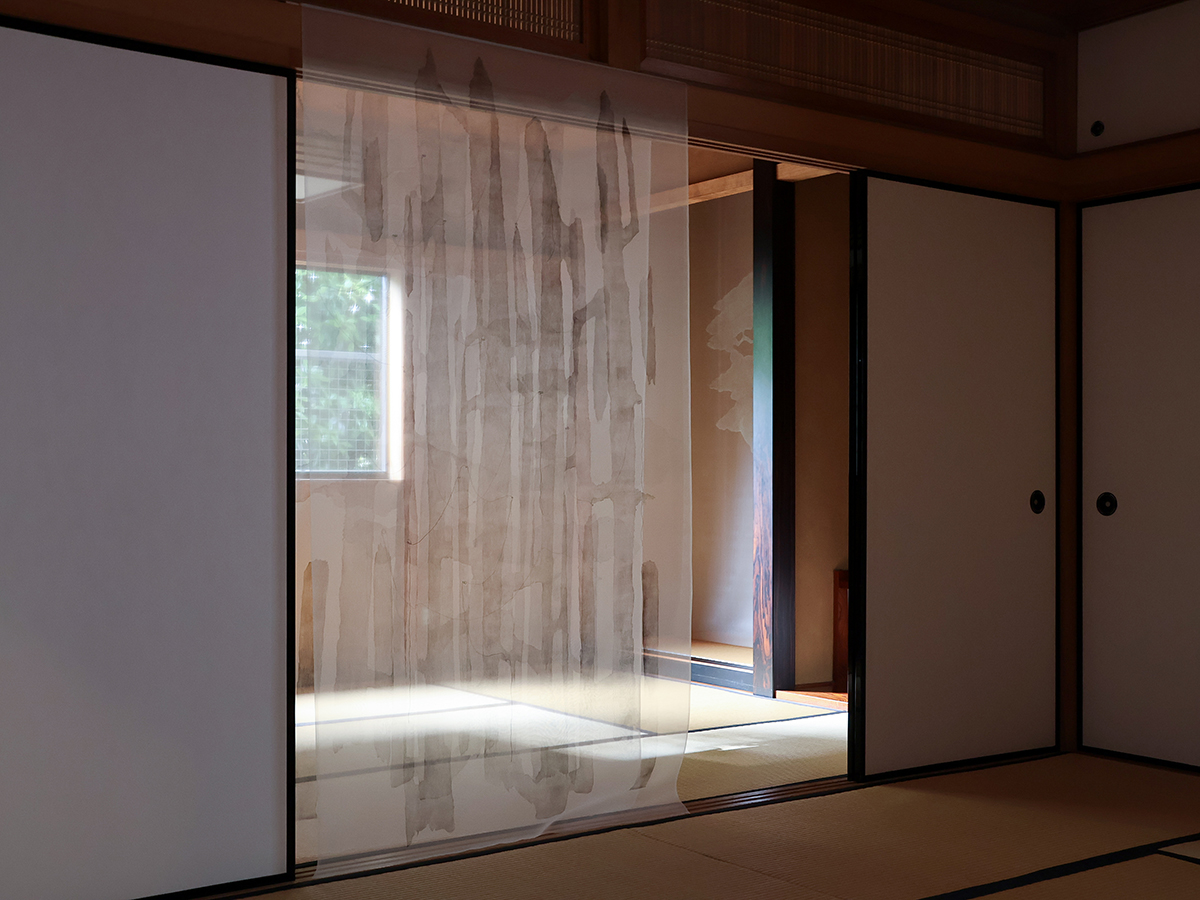
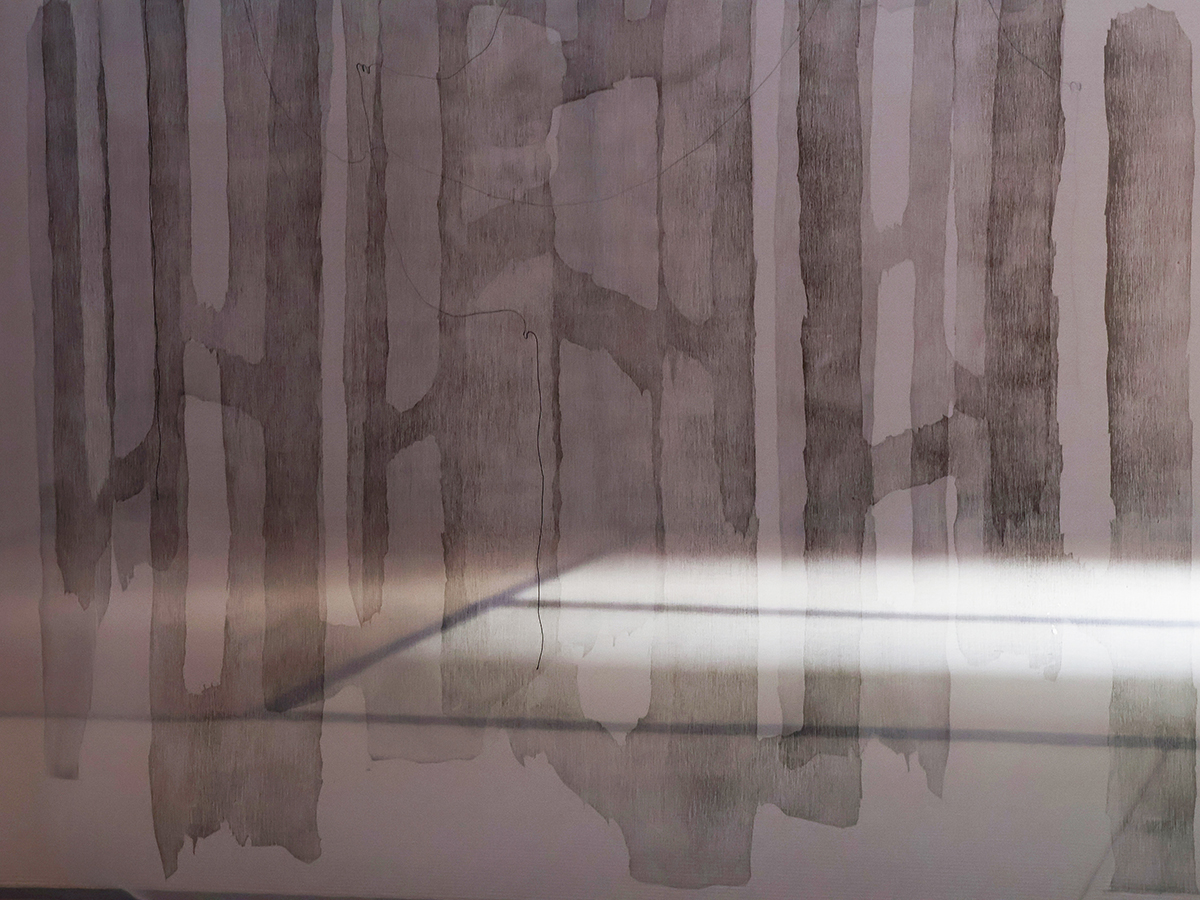
La Dimensione Nascosta
-かくれた次元-
The Hidden Dimension
2011, variable dimension
mixed media installation
(9 fabrics 205 x 140 cm, woodcut on silk organdy)
ミクストメディアインスタレーション
photo ©Mami Takahashi
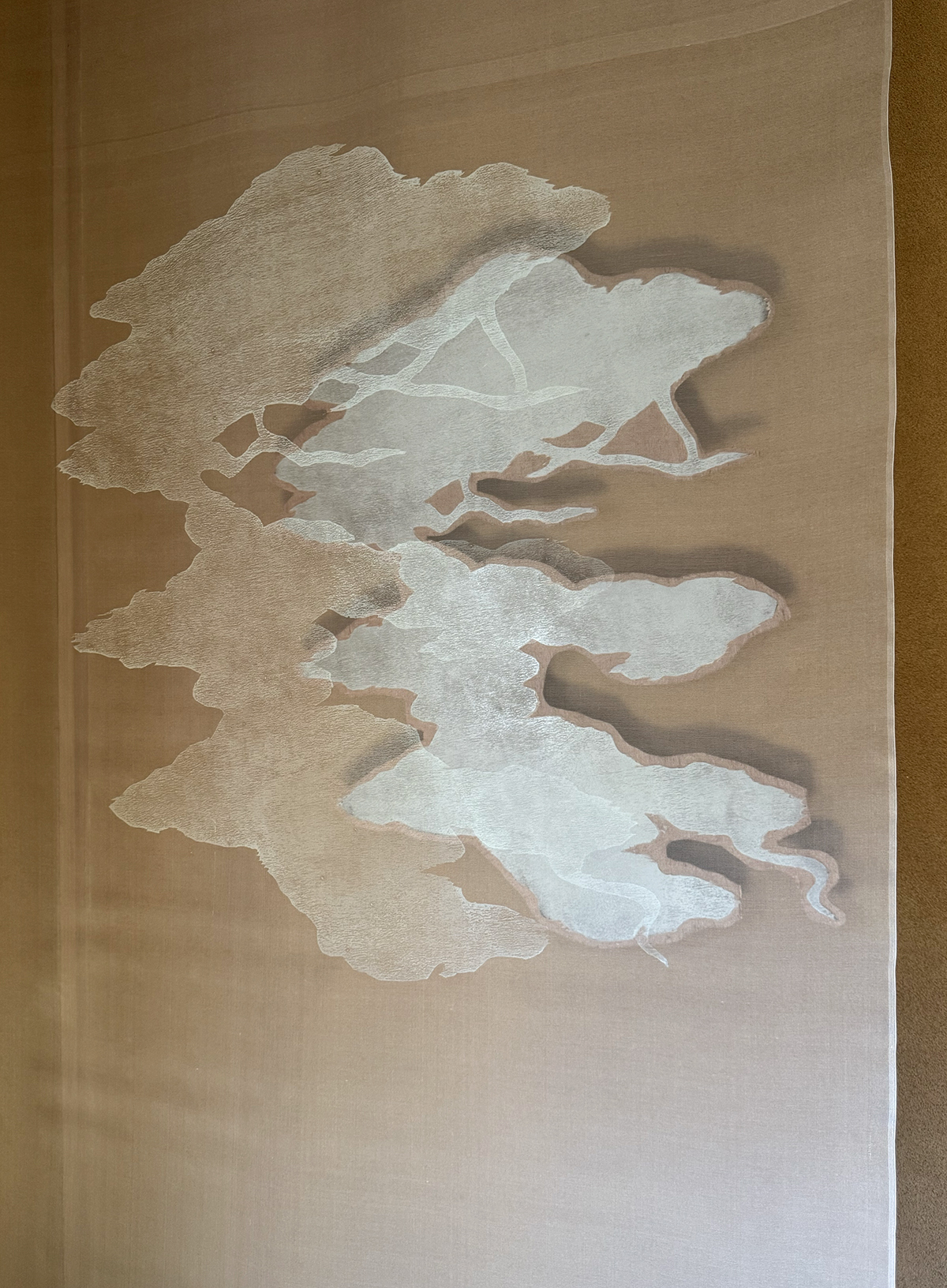
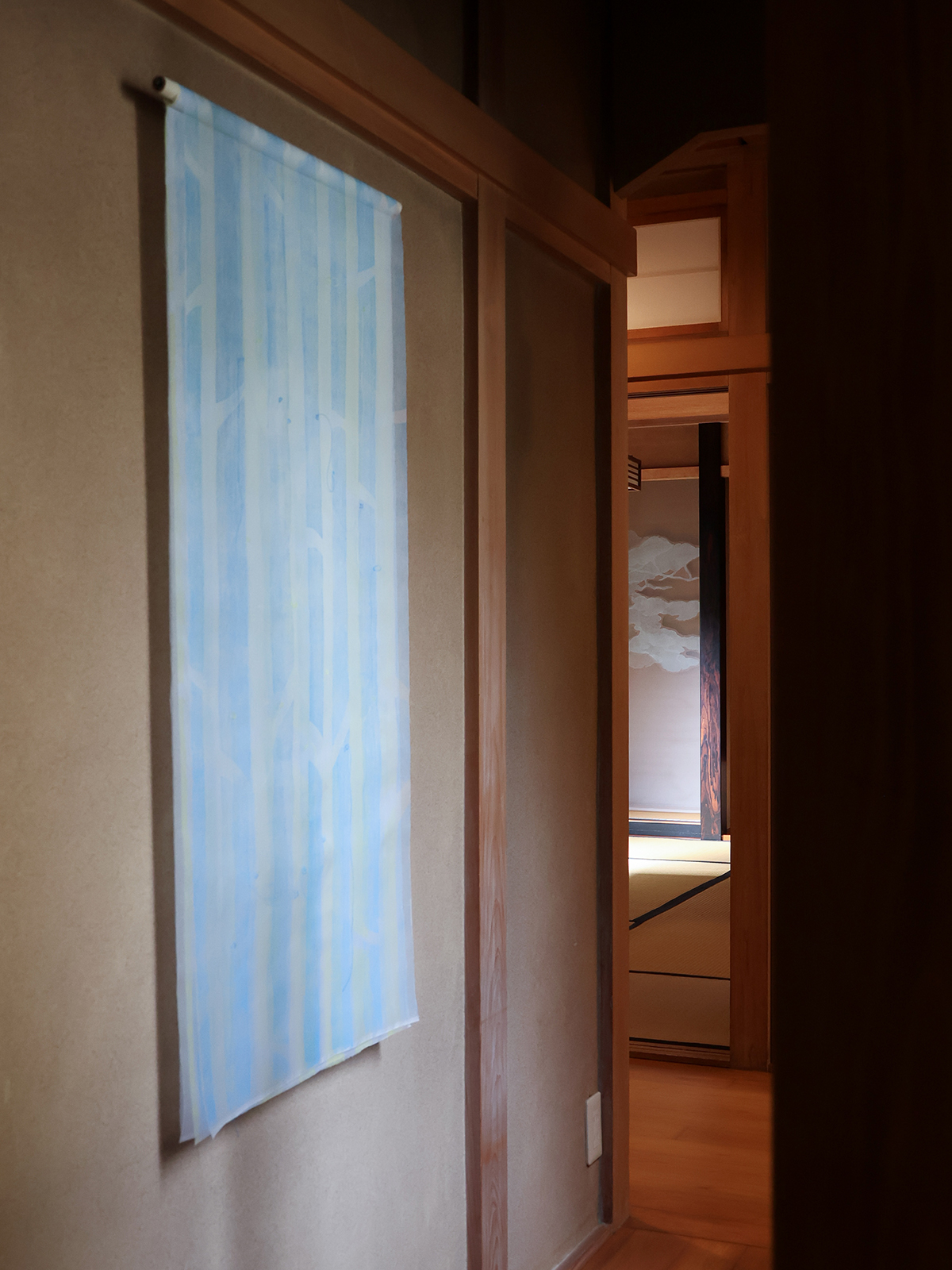
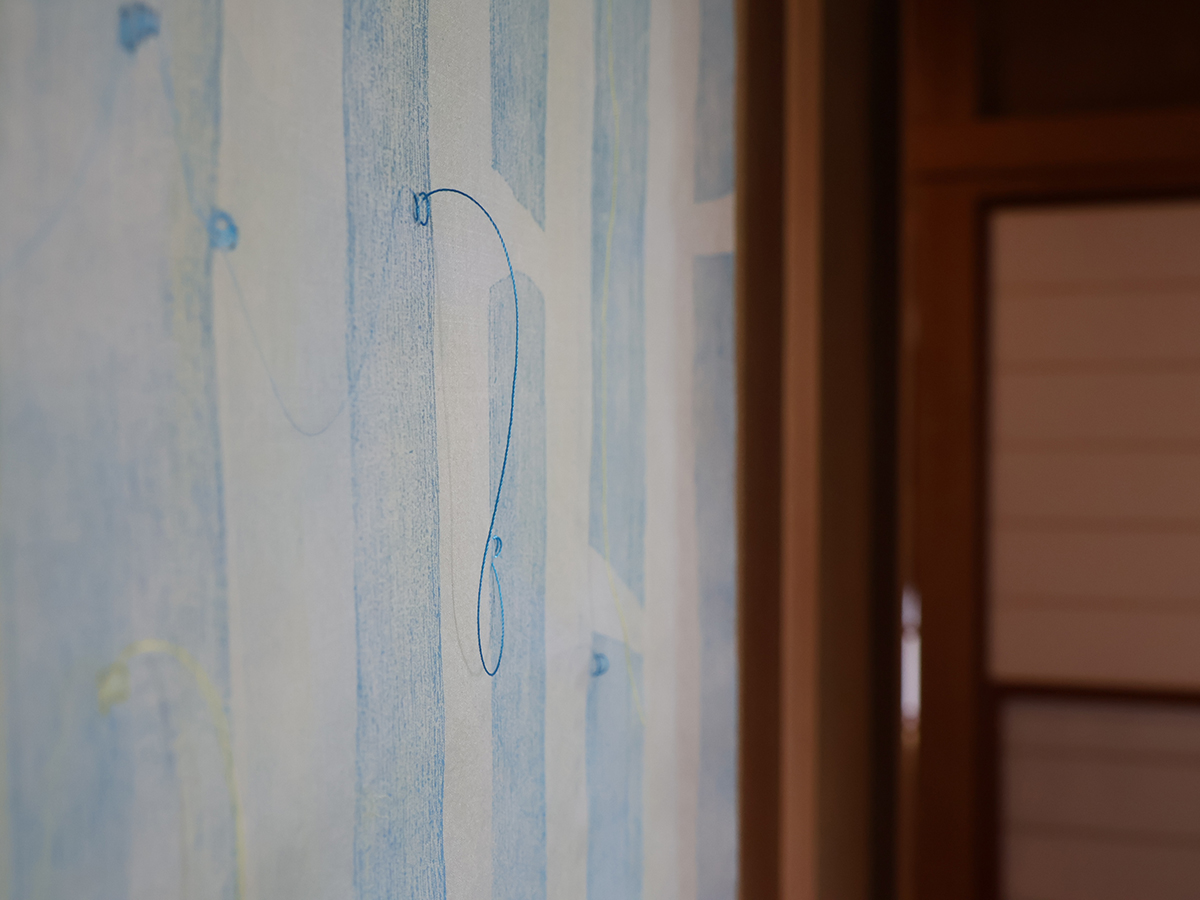
un confine
-ある境界-
a boundary
2025, 200 x 107 cm
woodcut on silk organdy
木版、絹、糸
photo ©Mami Takahashi
Nuvole che vengono da me
-飛雲-
Clouds coming to me
2025, variable dimension
mixed media installation
wood carving, woodcut on silk organdy
木彫, 木版, 絹オーガンジー
photo ©Mami Takahashi
対話の会「いまここ」溝口住職+宮山+来訪者
Dialogue "Here and Now" Chief Priest + Artist + Visiters, 18th May 2025
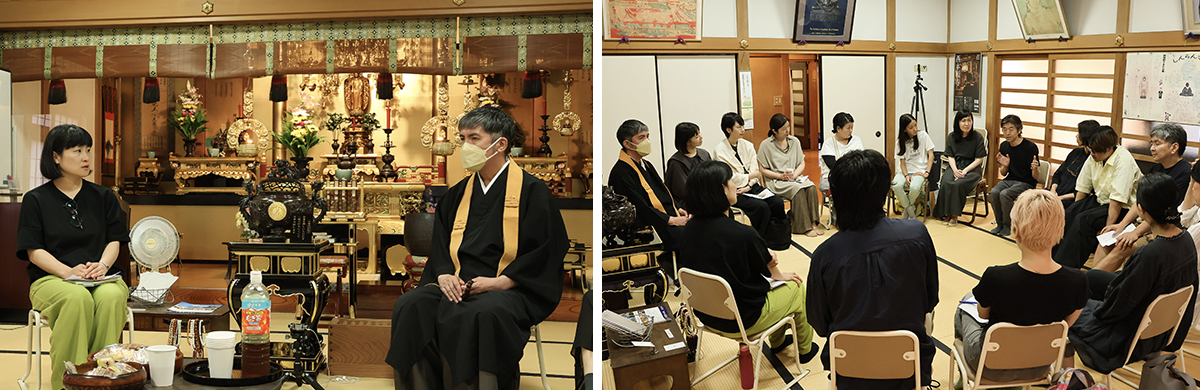
本展では、照恩寺住職・溝口氏、アーティスト、そして来訪者との対話を通して、「いまここ」をめぐる思索が重ねられました。
溝口住職は、仏教とアートの共通点を「ものの見方を変える力」に見出します。生と死は切り離せるものではなく、死を見つめることは生を問い直すことでもある。仏教とは死後の救いではなく、「いまここ」における救いを見出す営みであると語りました。
アーティストは、長年のイタリアでの活動を経て、版画という二次元表現から、作品と時間/空間/鑑賞者との「あいだ」に生まれる関係性へと関心が移っていった経緯を振り返ります。寺院という空間の中で試みたのは、光や空気によって絶えず変化する境界を可視化することでした。版木と刷られたイメージを反転的に吊るし、床の間を軸に構成された空間は、歩み寄り、座して観るという身体性を含めて体験されます。
展示タイトル「Carpe Diem(カルペ・ディエム)」は、「今この瞬間を生きる」という古代の格言に由来します。それは仏教の「いまここ」とも響き合い、本展は、その瞬間にしか立ち現れない光や揺らぎの中で、鑑賞者が自身の現在を意識する場となることを志向しました。
来訪者からは、作品を「風になびく存在」として捉える声や、透ける素材が記憶を呼び起こすという感想が寄せられました。糸による繊細な構造が時間を留めているように感じられる一方で、揺れ続ける確かな存在感があること。床の間の前に座したときに生まれる視覚のずれや、版木の物質性と透明な布の同居も印象として共有されました。
本展は、寺院という場において、作品と空間、身体と時間の「あいだ」に生まれる関係を探る試みでした。対話を通して浮かび上がったのは、「いまここ」に立つ自己をどのように捉え直すかという問いであり、その問いは、鑑賞体験そのものの中に静かに織り込まれています。
This exhibition brought together conversations among the head priest of Shoonji Temple, the artist, and visitors, centering on the question of the “here and now.”
The priest spoke of a shared ground between Buddhism and art: their capacity to shift perception. Life and death are inseparable; to contemplate death is to reconsider life. Buddhism, he noted, does not promise salvation after death but calls for awakening in the present moment.
After nearly twenty years of working in Italy, the artist has moved from printmaking as a two-dimensional medium toward a relational practice in which artwork, space, time, and viewer shape one another. Within the temple, the exhibition articulated an “interval as void,” where boundaries are unsettled by light and air. Woodblocks and printed images were suspended in reversal around the tokonoma alcove as a spatial axis. Meaning unfolds through embodied perception—walking, lowering the body, sitting—activating a mode of viewing specific to the tatami room.
Titled Carpe Diem, the exhibition echoes the call to seize the present, resonating with the Buddhist notion of the “here and now.” Rather than depicting time, the work makes it perceptible through fleeting light and subtle motion.
Visitors described the works as gently swaying and translucent, evoking memory. Delicate thread structures seemed to suspend time while remaining in motion. The perceptual shift experienced when seated before the tokonoma, and the tension between solid woodblock and transparent fabric, emphasized the instability of front and back, surface and depth.
In the temple setting, the exhibition became an inquiry into relational perception—between artwork and site, body and temporality—inviting a renewed awareness of how we situate ourselves in the present.
The priest spoke of a shared ground between Buddhism and art: their capacity to shift perception. Life and death are inseparable; to contemplate death is to reconsider life. Buddhism, he noted, does not promise salvation after death but calls for awakening in the present moment.
After nearly twenty years of working in Italy, the artist has moved from printmaking as a two-dimensional medium toward a relational practice in which artwork, space, time, and viewer shape one another. Within the temple, the exhibition articulated an “interval as void,” where boundaries are unsettled by light and air. Woodblocks and printed images were suspended in reversal around the tokonoma alcove as a spatial axis. Meaning unfolds through embodied perception—walking, lowering the body, sitting—activating a mode of viewing specific to the tatami room.
Titled Carpe Diem, the exhibition echoes the call to seize the present, resonating with the Buddhist notion of the “here and now.” Rather than depicting time, the work makes it perceptible through fleeting light and subtle motion.
Visitors described the works as gently swaying and translucent, evoking memory. Delicate thread structures seemed to suspend time while remaining in motion. The perceptual shift experienced when seated before the tokonoma, and the tension between solid woodblock and transparent fabric, emphasized the instability of front and back, surface and depth.
In the temple setting, the exhibition became an inquiry into relational perception—between artwork and site, body and temporality—inviting a renewed awareness of how we situate ourselves in the present.
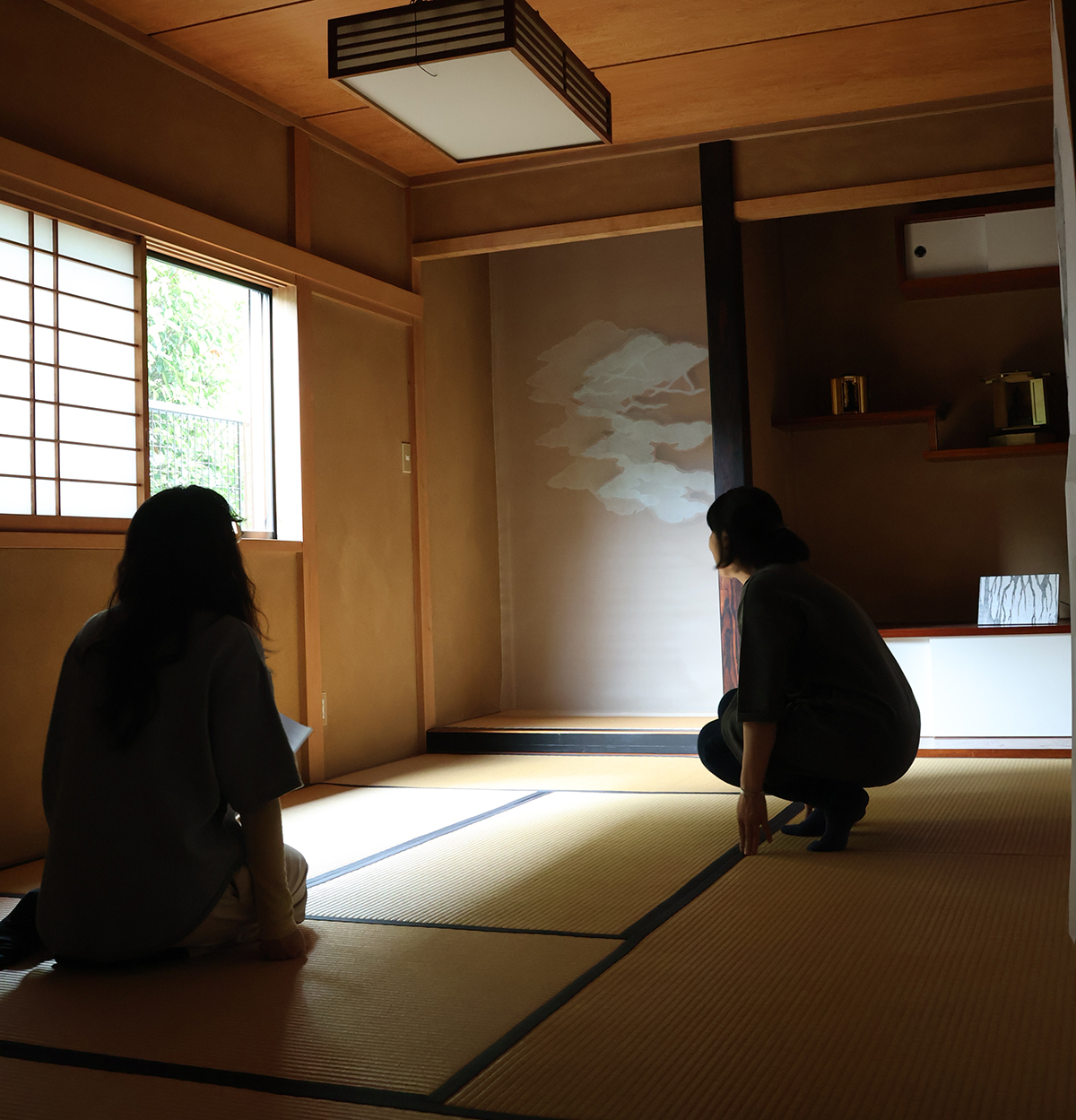
対話の会「時/空/間」港 千尋 (写真家/著述家) + 宮山 + 来訪者
Dialogue "Time/Space/Between" Chihiro Minato (Photographer/Author/Critic) + Artist + Visiters, 23th May 2025
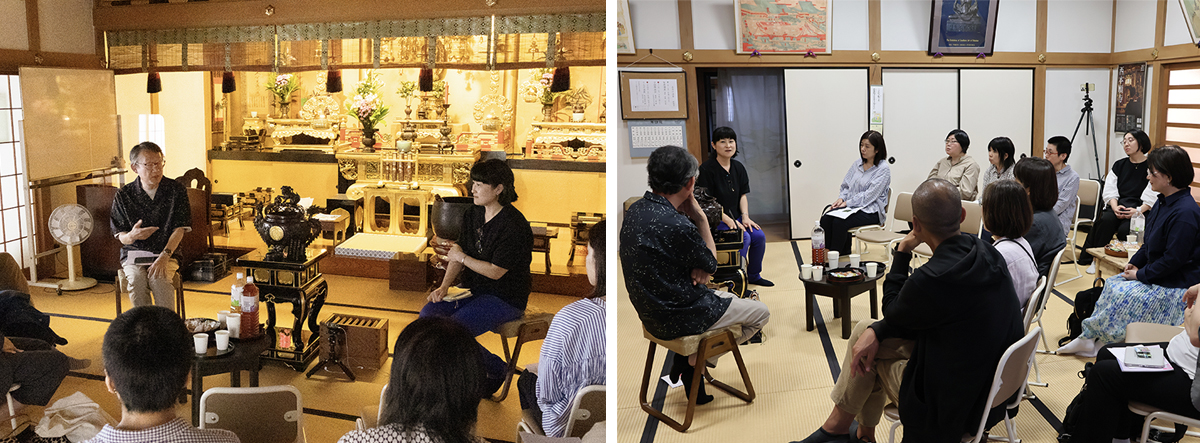
今回の対話は、本展のインスタレーションを起点に、空間の認知や視点のあり方が文化や時代によっていかに異なり、それが社会構造や人間関係とどのように結びついているかを探る時間となりました。
冒頭、港は、靴を脱いで空間に入り、自身の身長に近いスケールで作品と向き合う体験の新鮮さに触れました。曇天の光に包まれた室内は柔らかなライトボックスのようで、色彩は固定されず移ろい続ける。二次元でありながら「向こう側」を感じさせる宮山の作品は、次の間や中庭、最奥の床の間へと視線を導きます。連続しながら仕切られる空間のリズムは、ヨーロッパ的建築とは異なる時間と身体感覚を伴い、「あいだ」を意識させるものであると語りました。
宮山は、縁側の障子越しに移ろう光と影から着想し、「内」にある「外」、中庭という「外」の向こうに見える「内」、そして精神的な「外」としての床の間へと、内外が段階的に反転する構成を試みたと述べます。西欧空間に特徴的な仰ぎ見る視線に対し、和室では水平移動や座位による目線の変化が重要であること。鑑賞者の歩みや跪き、立ち上がりといった身体の動きそのものが、作品との関係を組み替えるよう設計したと語りました。
さらに宮山は、長年の海外フィールドワークやイタリアとの往還を通して、文化ごとに異なる「視線の高さ」や前後関係の認識に気づいた経験を共有します。西欧的な主体中心の確固たる視点に対し、日本文化には主客が柔軟に転換する身体感覚があるのではないかという問いです。その象徴として挙げられたのが茶道の扇子の所作でした。閉じた扇子を前に置いて主客のあいだに境を設け、敬意を表し、取り払うことで同じ立ち位置に立つ。一本の扇子が関係性を可視化し、また解く。この行為は、日本語のウチ/ソトの感覚や、箸を置いてから食事をいただく所作にも通じる、日常に根付いた空間倫理であると語られました。
港は、こうした所作や制度を人類学的に「コード」と捉えます。コードとは文化の中で共有される見えない約束事であり、空間の使い方や視線の配置、主体と客体の関係を無意識のうちに規定する枠組みです。そして歴史の転換点には、そのコード自体が可視化され、揺らぎ、ときに解体されると指摘します。
写真技術の成立もその一例です。カメラにおいてSubjectは「主題」を指し、Objectは対物レンズを意味する。撮られる対象がObjectであるはずなのに、装置の中心には「Object=レンズ」があるという主客のねじれが生じているのです。19世紀の写真の発明前後、近代西洋では「撮っているつもりが、実は撮られているのではないか」といった主客逆転の思考が現れました。港はこれを近代的主体の揺らぎの象徴として位置づけます。革命や制度変化によってコード化されていた秩序が解体され、社会が別のモードへ移行する。明治維新をはじめ、世界各地で「社会の扇子が解かれる」瞬間があったのではないかと示唆します。
この視点を受け、宮山はイタリア社会から学んだ「コードの変容」に言及します。1960〜70年代の精神病院解体運動や、障害の有無で教育を分離しないフルインクルーシブ教育への転換は、制度改革にとどまらず、社会における境界の引き方そのものを問い直すものでした。排除ではなく、異なる他者から学ぶ権利を守るという発想。それは誰かを外側に置くのではなく、関係の内部に位置づけ直す文化的選択でもありました。
来訪者からは、義足のアーティストが経験する視線の高低差、日本の美術館における「145cm」という展示基準、和室で自然と跪く身体感覚など、多様な具体例が共有されました。視点の高さや位置は中立ではなく、「誰を基準に世界が設計されているのか」という問いを内包していることが浮かび上がります。
対話はさらに、イタリアの包摂的な社会観や、仏教における生と死を分断しない視座にも及びました。見えない存在を含めた全体性へのまなざしは、境界を拡張する想像力とも言えるでしょう。
寺院という「サードプレイス」において、今回の対話は、自己と他者、内と外、前と後、上と下といった二元的枠組みを越え、「あいだ」に立ち現れる関係性を見つめ直す時間となりました。本展が体現していたのは、「いまここ」における空間認知の更新と、身体とともに変化する見え方の実践です。空間を通して自らの位置を問い、境を設け、そしてひらく。その往還こそが、視点の転換と関係の再編の可能性を示唆しています。
冒頭、港は、靴を脱いで空間に入り、自身の身長に近いスケールで作品と向き合う体験の新鮮さに触れました。曇天の光に包まれた室内は柔らかなライトボックスのようで、色彩は固定されず移ろい続ける。二次元でありながら「向こう側」を感じさせる宮山の作品は、次の間や中庭、最奥の床の間へと視線を導きます。連続しながら仕切られる空間のリズムは、ヨーロッパ的建築とは異なる時間と身体感覚を伴い、「あいだ」を意識させるものであると語りました。
宮山は、縁側の障子越しに移ろう光と影から着想し、「内」にある「外」、中庭という「外」の向こうに見える「内」、そして精神的な「外」としての床の間へと、内外が段階的に反転する構成を試みたと述べます。西欧空間に特徴的な仰ぎ見る視線に対し、和室では水平移動や座位による目線の変化が重要であること。鑑賞者の歩みや跪き、立ち上がりといった身体の動きそのものが、作品との関係を組み替えるよう設計したと語りました。
さらに宮山は、長年の海外フィールドワークやイタリアとの往還を通して、文化ごとに異なる「視線の高さ」や前後関係の認識に気づいた経験を共有します。西欧的な主体中心の確固たる視点に対し、日本文化には主客が柔軟に転換する身体感覚があるのではないかという問いです。その象徴として挙げられたのが茶道の扇子の所作でした。閉じた扇子を前に置いて主客のあいだに境を設け、敬意を表し、取り払うことで同じ立ち位置に立つ。一本の扇子が関係性を可視化し、また解く。この行為は、日本語のウチ/ソトの感覚や、箸を置いてから食事をいただく所作にも通じる、日常に根付いた空間倫理であると語られました。
港は、こうした所作や制度を人類学的に「コード」と捉えます。コードとは文化の中で共有される見えない約束事であり、空間の使い方や視線の配置、主体と客体の関係を無意識のうちに規定する枠組みです。そして歴史の転換点には、そのコード自体が可視化され、揺らぎ、ときに解体されると指摘します。
写真技術の成立もその一例です。カメラにおいてSubjectは「主題」を指し、Objectは対物レンズを意味する。撮られる対象がObjectであるはずなのに、装置の中心には「Object=レンズ」があるという主客のねじれが生じているのです。19世紀の写真の発明前後、近代西洋では「撮っているつもりが、実は撮られているのではないか」といった主客逆転の思考が現れました。港はこれを近代的主体の揺らぎの象徴として位置づけます。革命や制度変化によってコード化されていた秩序が解体され、社会が別のモードへ移行する。明治維新をはじめ、世界各地で「社会の扇子が解かれる」瞬間があったのではないかと示唆します。
この視点を受け、宮山はイタリア社会から学んだ「コードの変容」に言及します。1960〜70年代の精神病院解体運動や、障害の有無で教育を分離しないフルインクルーシブ教育への転換は、制度改革にとどまらず、社会における境界の引き方そのものを問い直すものでした。排除ではなく、異なる他者から学ぶ権利を守るという発想。それは誰かを外側に置くのではなく、関係の内部に位置づけ直す文化的選択でもありました。
来訪者からは、義足のアーティストが経験する視線の高低差、日本の美術館における「145cm」という展示基準、和室で自然と跪く身体感覚など、多様な具体例が共有されました。視点の高さや位置は中立ではなく、「誰を基準に世界が設計されているのか」という問いを内包していることが浮かび上がります。
対話はさらに、イタリアの包摂的な社会観や、仏教における生と死を分断しない視座にも及びました。見えない存在を含めた全体性へのまなざしは、境界を拡張する想像力とも言えるでしょう。
寺院という「サードプレイス」において、今回の対話は、自己と他者、内と外、前と後、上と下といった二元的枠組みを越え、「あいだ」に立ち現れる関係性を見つめ直す時間となりました。本展が体現していたのは、「いまここ」における空間認知の更新と、身体とともに変化する見え方の実践です。空間を通して自らの位置を問い、境を設け、そしてひらく。その往還こそが、視点の転換と関係の再編の可能性を示唆しています。
This dialogue began from the installation presented in the exhibition and evolved into an exploration of how spatial perception and modes of seeing differ across cultures and historical periods, and how these differences are intertwined with social structures and human relationships.
At the outset, Minato spoke about the freshness of entering the space barefoot and encountering the works at a scale close to his own height. The room, enveloped in overcast light, resembled a soft lightbox in which colors never remained fixed but continuously shifted. Although two-dimensional, Miyayama’s works evoke a sense of “beyond,” guiding the viewer’s gaze toward the next room, the inner courtyard, and finally the innermost alcove. The rhythm of spaces—continuous yet partitioned—carries a temporality and bodily sensibility distinct from European architecture, drawing attention to the presence of the “in-between.”
Miyayama explained that her composition was inspired by the shifting light and shadow seen through shoji screens along the engawa veranda: an “outside” within the “inside,” an “inside” glimpsed beyond the courtyard as “outside,” and finally the alcove as a kind of spiritual “outside.” Through this layered structure, interior and exterior gradually reverse. In contrast to the upward, elevated gaze characteristic of Western space, the Japanese room emphasizes horizontal movement and changes in eye level through seated positions. The viewer’s acts of walking, kneeling, and standing become integral gestures that continually reconfigure the relationship with the work.
Drawing from years of fieldwork abroad and her long engagement with Italy, Miyayama shared her awareness of how different cultures perceive eye level and spatial orientation. In contrast to the firmly centered subjectivity often associated with Western thought, she posed the question of whether Japanese culture contains a bodily sensibility in which subject and object can fluidly exchange positions. As a symbolic example, she referred to the gesture of placing a folded fan in the tea ceremony. The fan, set between host and guest, establishes a boundary and expresses respect; when removed, it allows both to stand on equal ground. A single fan makes relationships visible—and then dissolves them. This gesture resonates with the Japanese sensibility of uchi/soto (inside/outside) and even with everyday acts such as placing chopsticks down before beginning a meal: a spatial ethic embedded in daily life.
Minato approached such gestures and institutions anthropologically as “codes.” Codes are invisible agreements shared within a culture—frameworks that unconsciously shape how space is used, how gazes are positioned, and how subject and object are arranged. At historical turning points, these codes become visible, begin to tremble, and at times are dismantled.
The emergence of photography offers one such example. In the camera, “Subject” refers to the motif, while “Object” denotes the lens. Although the photographed entity is supposedly the object, the center of the apparatus is the “object”—the lens itself—producing a subtle inversion between subject and object. Around the invention of photography in the nineteenth century, modern Western thought began to entertain the idea that one who believes oneself to be observing might in fact be observed. Minato framed this as a sign of the instability of the modern subject. Revolutions and institutional transformations unravel coded orders, allowing society to shift into another mode. The Meiji Restoration, among others, may be seen as a moment when “the social fan” was unfolded.
Building on this perspective, Miyayama referred to transformations of social codes she encountered in Italy. The psychiatric reform movements of the 1960s and 70s, and the shift toward fully inclusive education that does not separate students based on disability, were not merely institutional reforms. They questioned the very way boundaries are drawn within society. Rather than exclusion, they proposed the right to learn from difference—repositioning others not outside the system but within the field of relation.
Visitors contributed further examples: the differing eye levels experienced by an artist with a prosthetic leg, the standard exhibition height of 145 cm in Japanese museums, and the bodily inclination to kneel naturally in a tatami room. Eye level and position are never neutral; they contain within them the question of who serves as the measure by which the world is designed.
The dialogue also extended to Italy’s inclusive social imagination and to a Buddhist perspective that does not divide life and death. A gaze that encompasses even the invisible may be understood as an imagination that expands boundaries.
Within the temple—functioning as a “third place”—the conversation between Miyayama and Minato became a time to reconsider relationships emerging in the “in-between,” beyond binary frameworks such as self and other, inside and outside, before and after, above and below. What the exhibition embodied was a renewal of spatial perception in the “here and now,” and a practice of seeing that shifts with the body. To question one’s position through space, to establish boundaries, and to open them again. That movement back and forth suggests the possibility of a shift in perspective and a reconfiguration of relationships.
At the outset, Minato spoke about the freshness of entering the space barefoot and encountering the works at a scale close to his own height. The room, enveloped in overcast light, resembled a soft lightbox in which colors never remained fixed but continuously shifted. Although two-dimensional, Miyayama’s works evoke a sense of “beyond,” guiding the viewer’s gaze toward the next room, the inner courtyard, and finally the innermost alcove. The rhythm of spaces—continuous yet partitioned—carries a temporality and bodily sensibility distinct from European architecture, drawing attention to the presence of the “in-between.”
Miyayama explained that her composition was inspired by the shifting light and shadow seen through shoji screens along the engawa veranda: an “outside” within the “inside,” an “inside” glimpsed beyond the courtyard as “outside,” and finally the alcove as a kind of spiritual “outside.” Through this layered structure, interior and exterior gradually reverse. In contrast to the upward, elevated gaze characteristic of Western space, the Japanese room emphasizes horizontal movement and changes in eye level through seated positions. The viewer’s acts of walking, kneeling, and standing become integral gestures that continually reconfigure the relationship with the work.
Drawing from years of fieldwork abroad and her long engagement with Italy, Miyayama shared her awareness of how different cultures perceive eye level and spatial orientation. In contrast to the firmly centered subjectivity often associated with Western thought, she posed the question of whether Japanese culture contains a bodily sensibility in which subject and object can fluidly exchange positions. As a symbolic example, she referred to the gesture of placing a folded fan in the tea ceremony. The fan, set between host and guest, establishes a boundary and expresses respect; when removed, it allows both to stand on equal ground. A single fan makes relationships visible—and then dissolves them. This gesture resonates with the Japanese sensibility of uchi/soto (inside/outside) and even with everyday acts such as placing chopsticks down before beginning a meal: a spatial ethic embedded in daily life.
Minato approached such gestures and institutions anthropologically as “codes.” Codes are invisible agreements shared within a culture—frameworks that unconsciously shape how space is used, how gazes are positioned, and how subject and object are arranged. At historical turning points, these codes become visible, begin to tremble, and at times are dismantled.
The emergence of photography offers one such example. In the camera, “Subject” refers to the motif, while “Object” denotes the lens. Although the photographed entity is supposedly the object, the center of the apparatus is the “object”—the lens itself—producing a subtle inversion between subject and object. Around the invention of photography in the nineteenth century, modern Western thought began to entertain the idea that one who believes oneself to be observing might in fact be observed. Minato framed this as a sign of the instability of the modern subject. Revolutions and institutional transformations unravel coded orders, allowing society to shift into another mode. The Meiji Restoration, among others, may be seen as a moment when “the social fan” was unfolded.
Building on this perspective, Miyayama referred to transformations of social codes she encountered in Italy. The psychiatric reform movements of the 1960s and 70s, and the shift toward fully inclusive education that does not separate students based on disability, were not merely institutional reforms. They questioned the very way boundaries are drawn within society. Rather than exclusion, they proposed the right to learn from difference—repositioning others not outside the system but within the field of relation.
Visitors contributed further examples: the differing eye levels experienced by an artist with a prosthetic leg, the standard exhibition height of 145 cm in Japanese museums, and the bodily inclination to kneel naturally in a tatami room. Eye level and position are never neutral; they contain within them the question of who serves as the measure by which the world is designed.
The dialogue also extended to Italy’s inclusive social imagination and to a Buddhist perspective that does not divide life and death. A gaze that encompasses even the invisible may be understood as an imagination that expands boundaries.
Within the temple—functioning as a “third place”—the conversation between Miyayama and Minato became a time to reconsider relationships emerging in the “in-between,” beyond binary frameworks such as self and other, inside and outside, before and after, above and below. What the exhibition embodied was a renewal of spatial perception in the “here and now,” and a practice of seeing that shifts with the body. To question one’s position through space, to establish boundaries, and to open them again. That movement back and forth suggests the possibility of a shift in perspective and a reconfiguration of relationships.