The Nothern Alps Art Festival 北アルプス国際芸術祭 @Sunuma Shrine 須沼新明社, 大町 長野 Japan 2024
le radici del cielo -空の根っこ- Kaori Miyayama
le radici del cielo
-空の根っこ-
The Roots of Heaven
2024, variable dimension
mixed media installation
woodcut and thread on silk organdy
木版、 糸、 絹オーガンジー
video © Tanja Houwerzijl
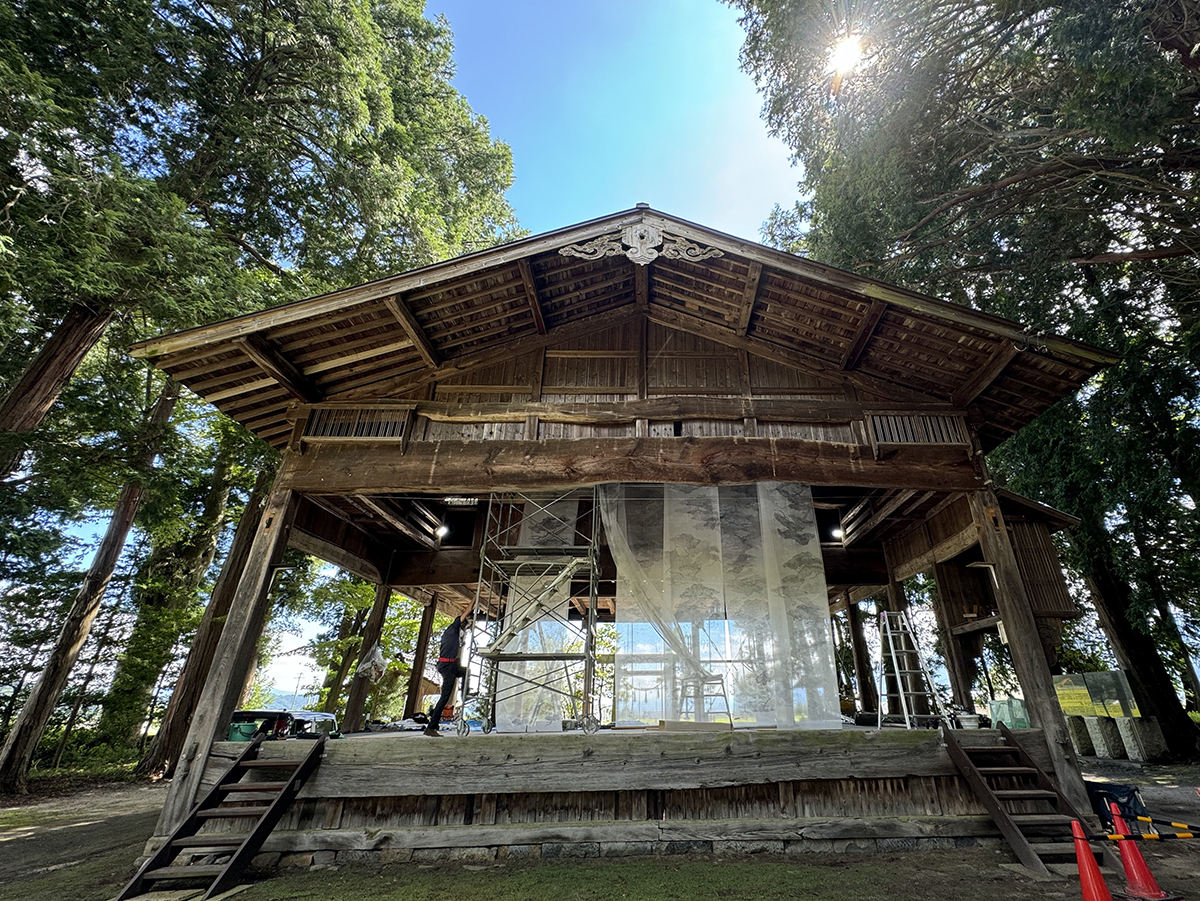
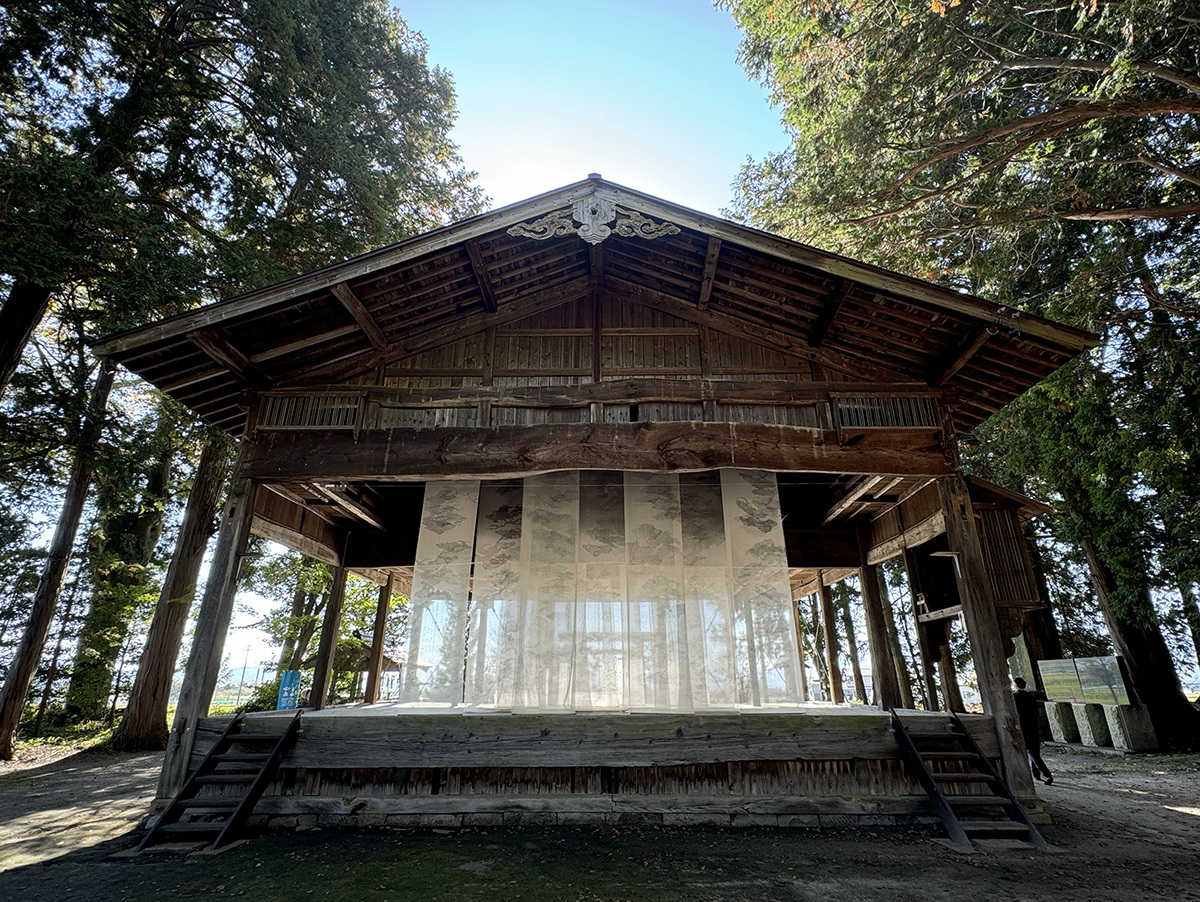
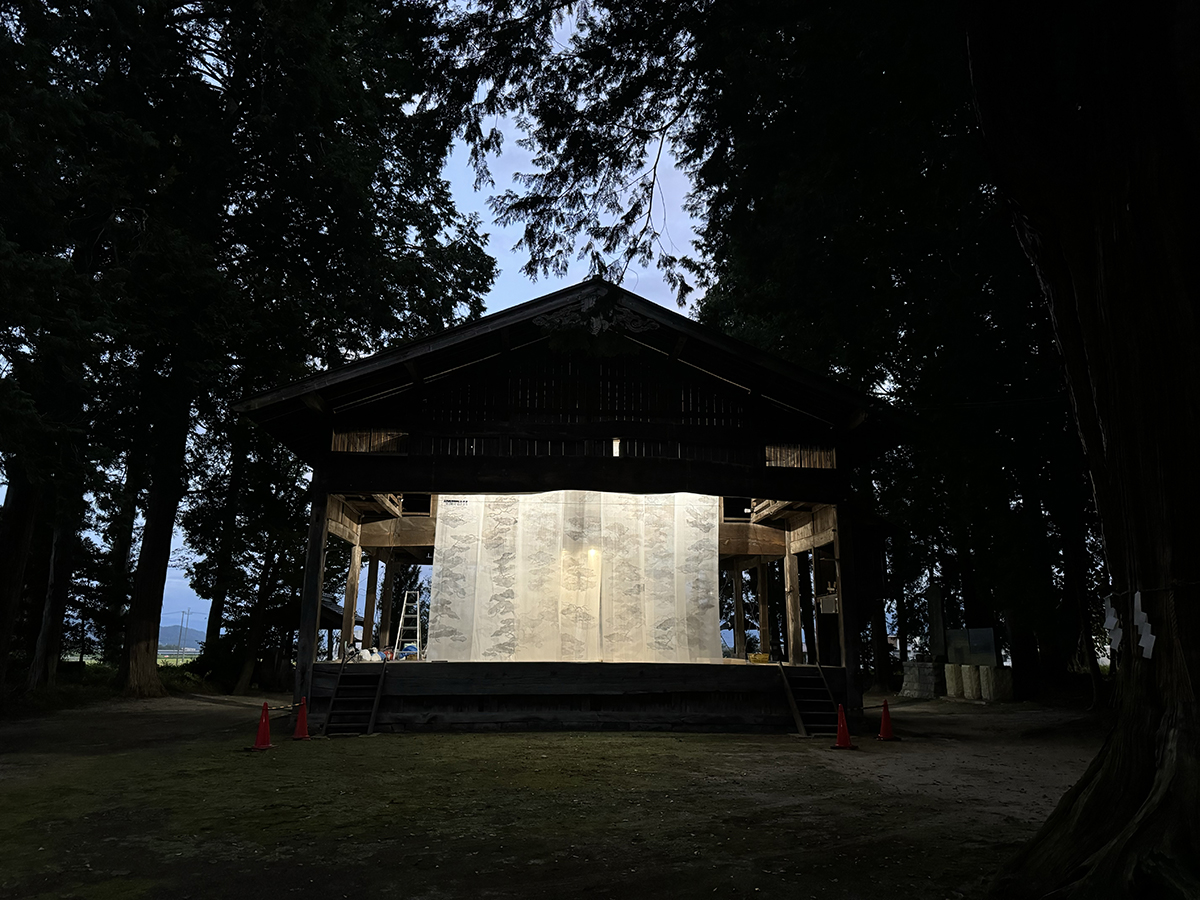
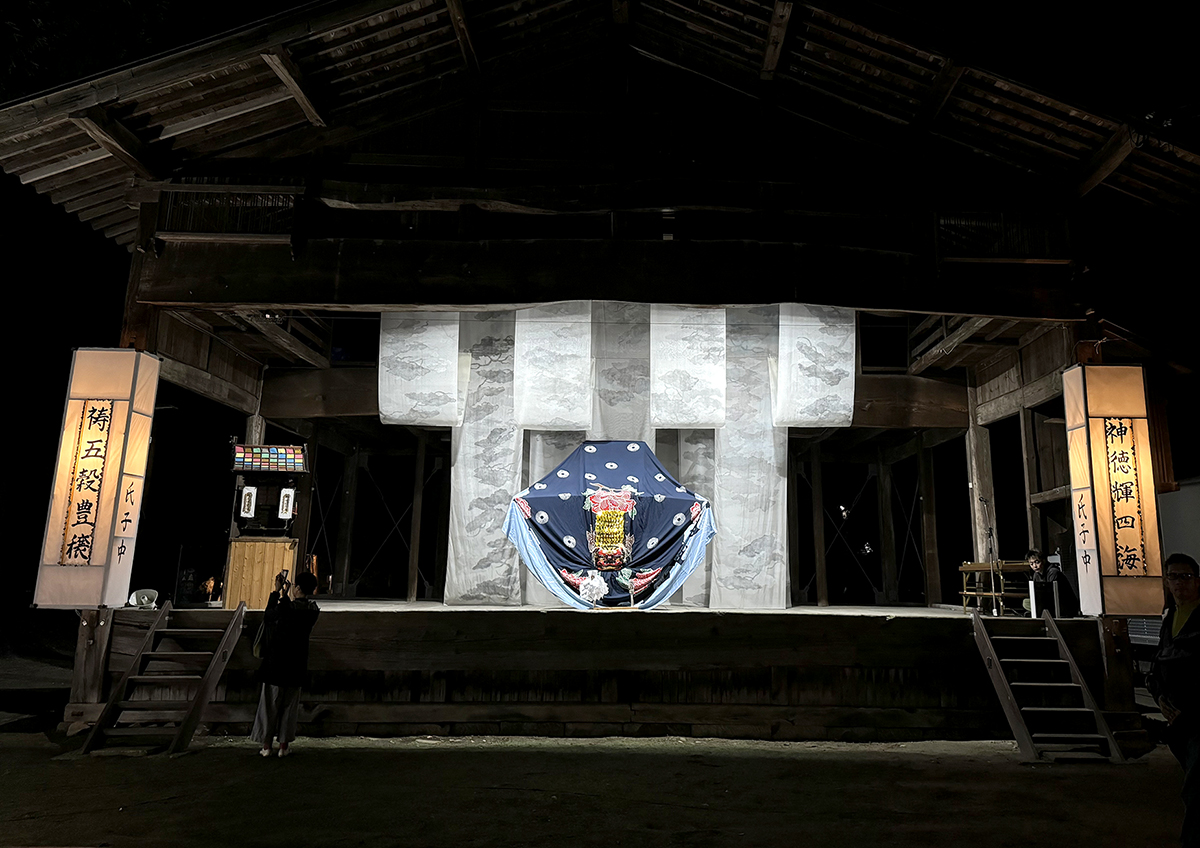
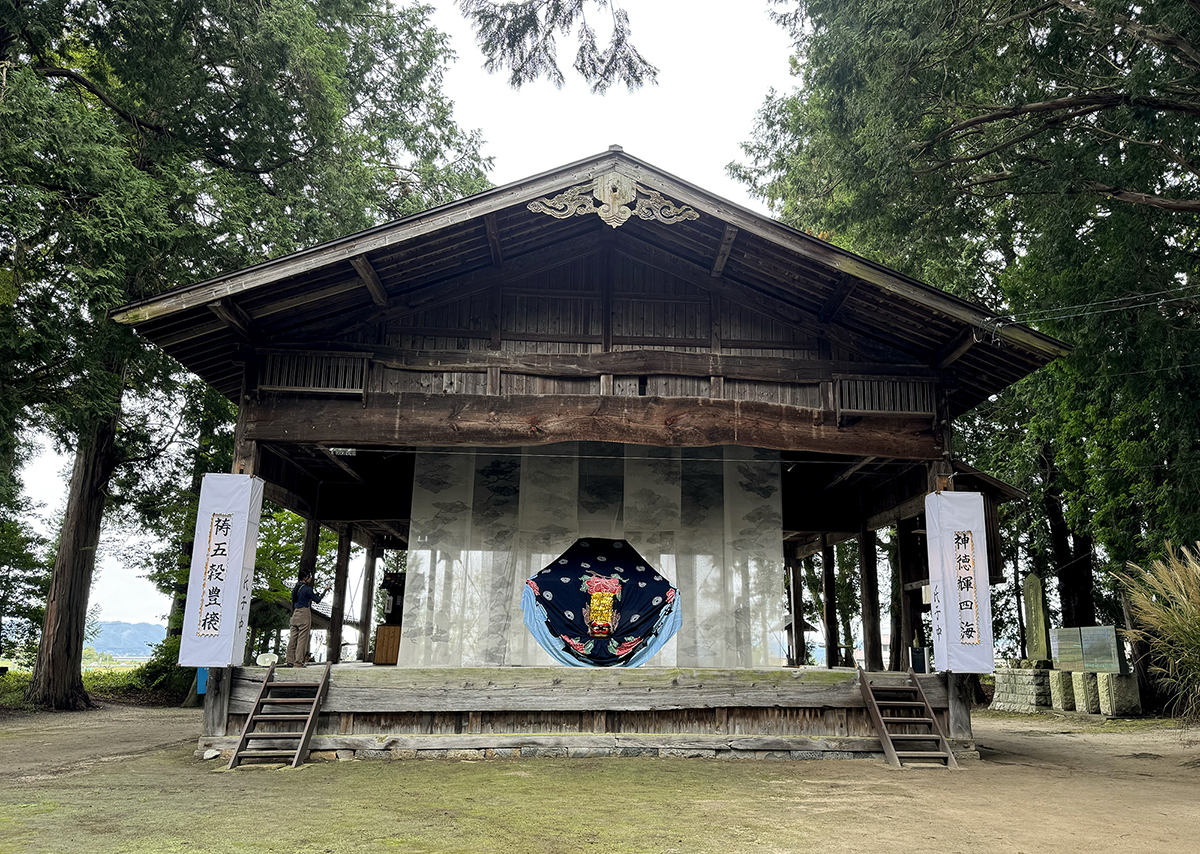
天照大神が祀られる須沼神明社の神楽殿に現れた《空の根っこ》は、天と地のあわいを表現したインスタレーション作品である。本作は、イタリア- マルケ州
のサンフランチェスコ教会を舞台に、堅牢な壁に守られたカトリックの空間で誕生したシリーズの最新作だ。
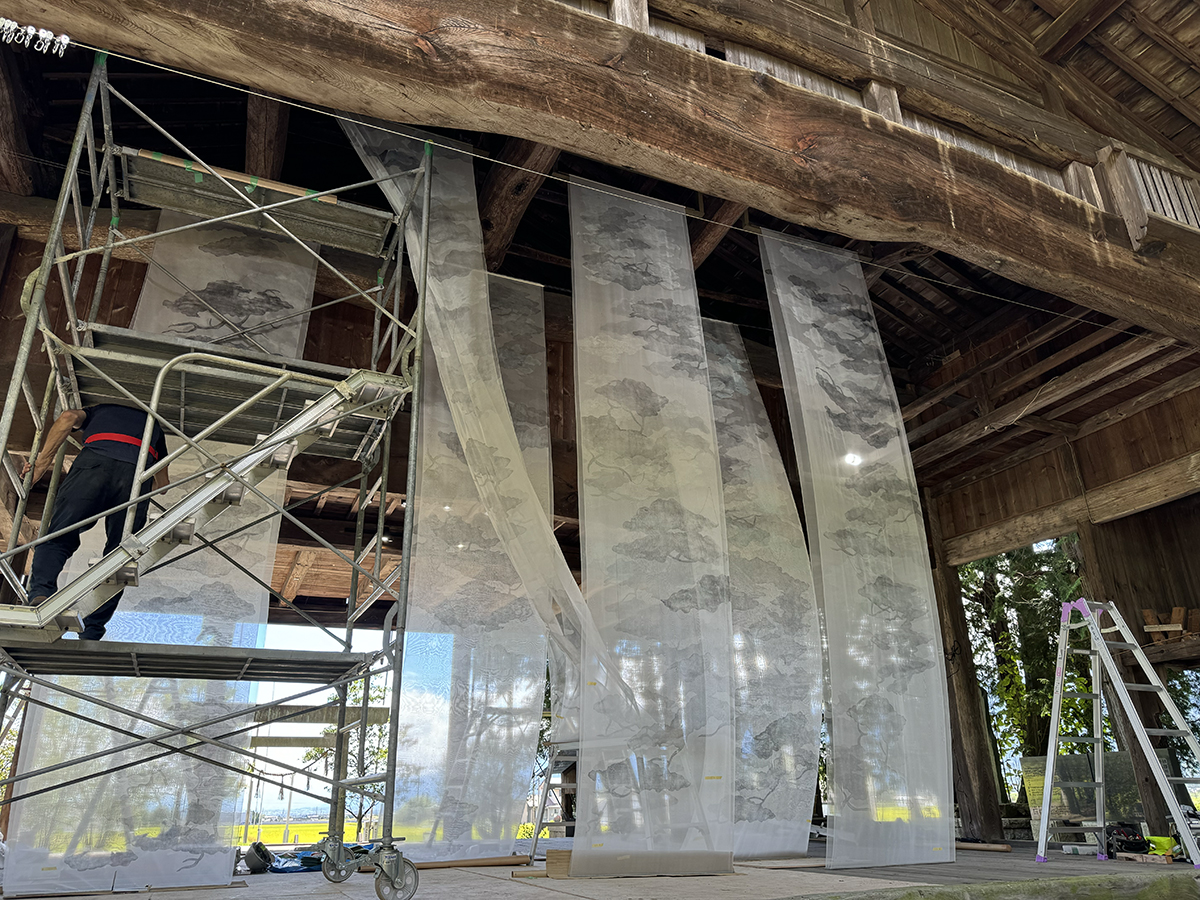
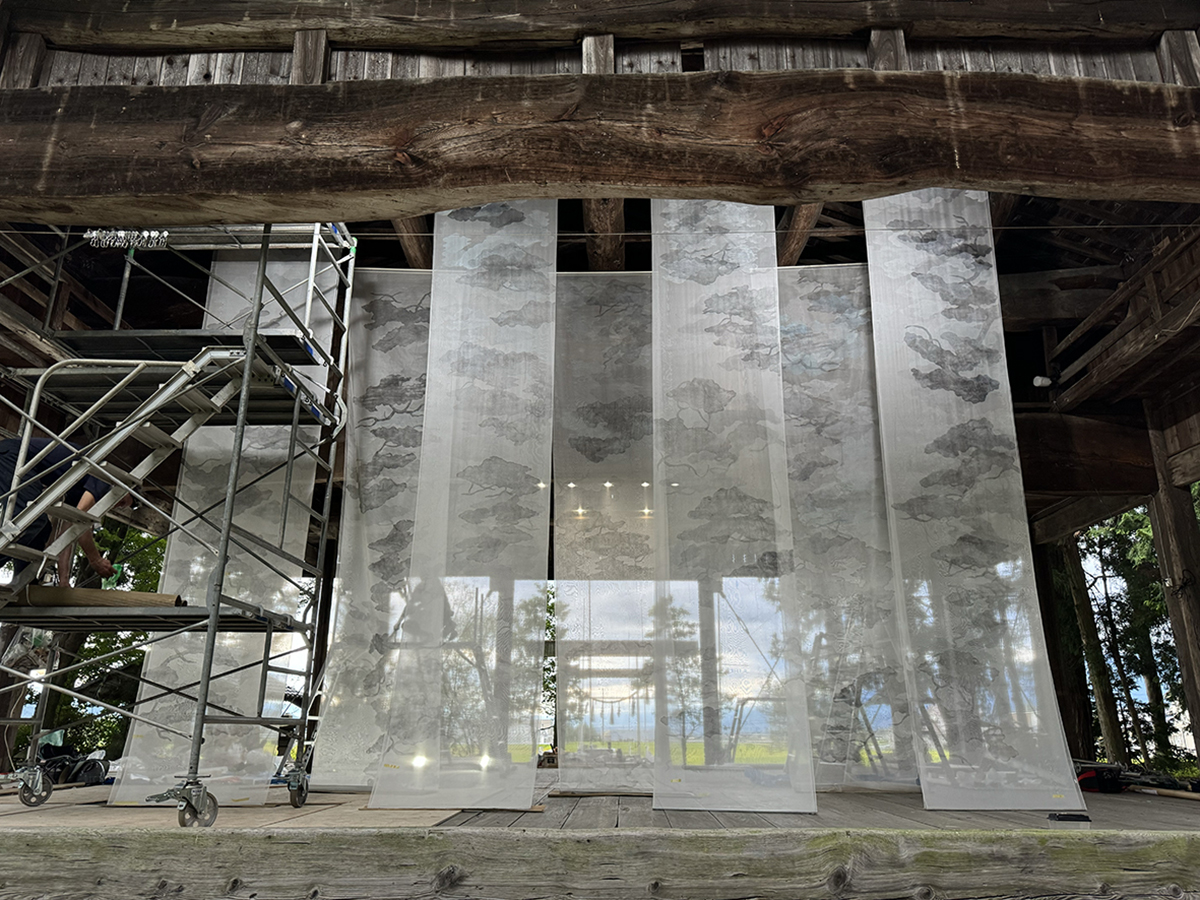
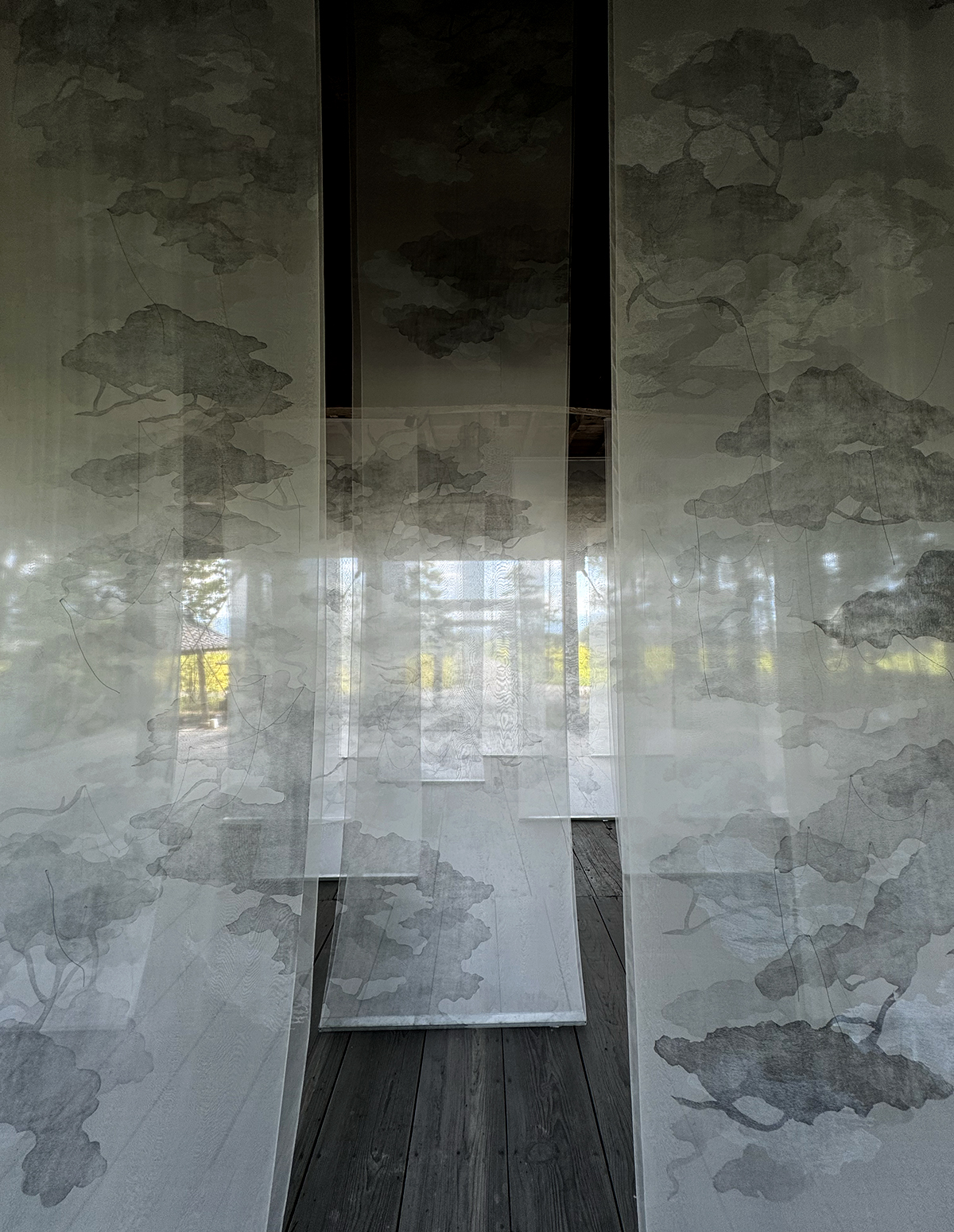
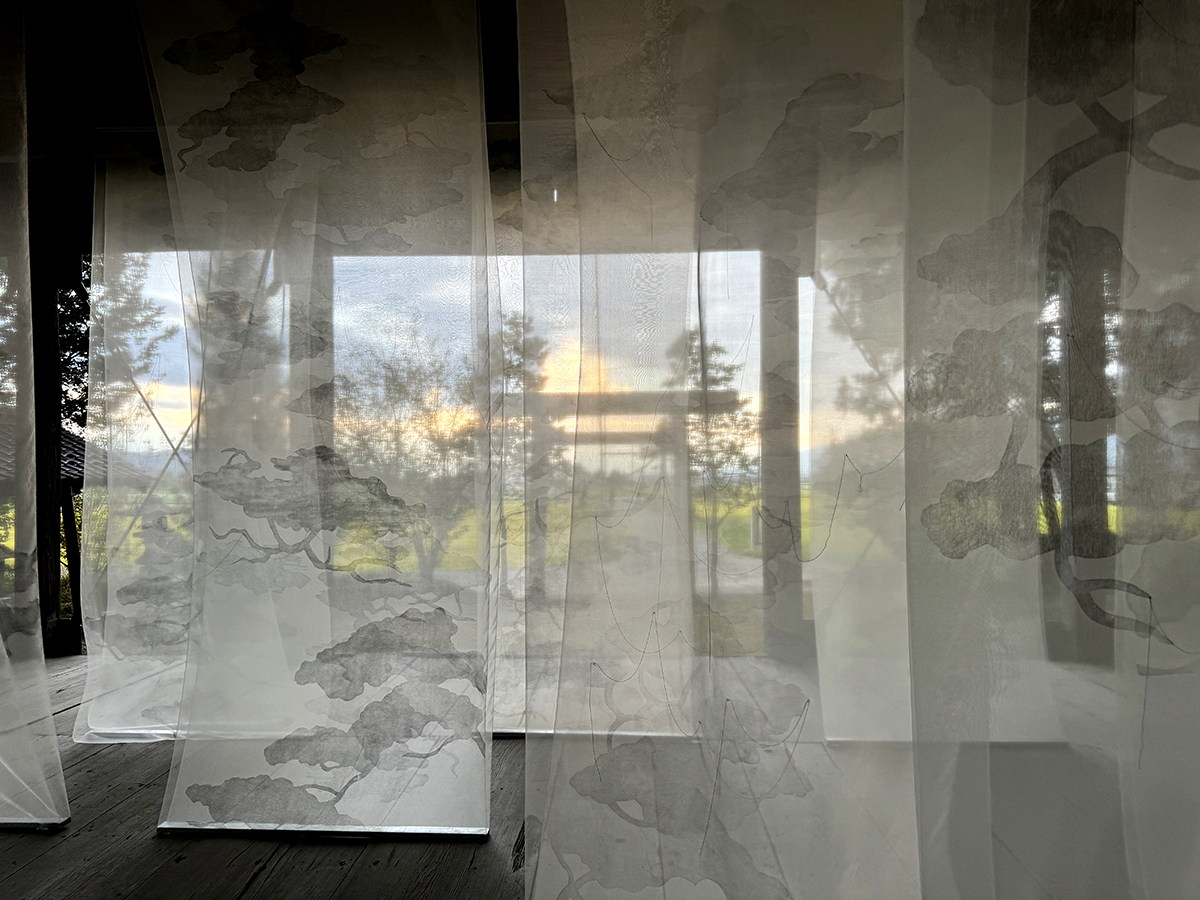
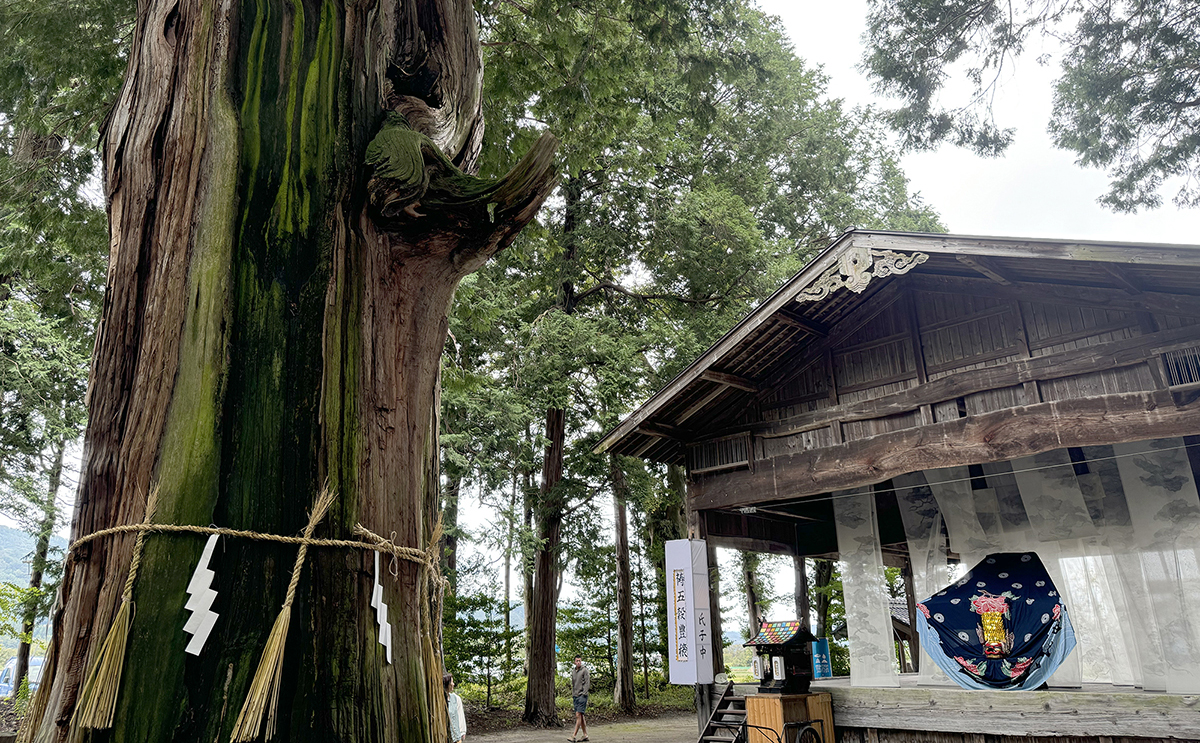
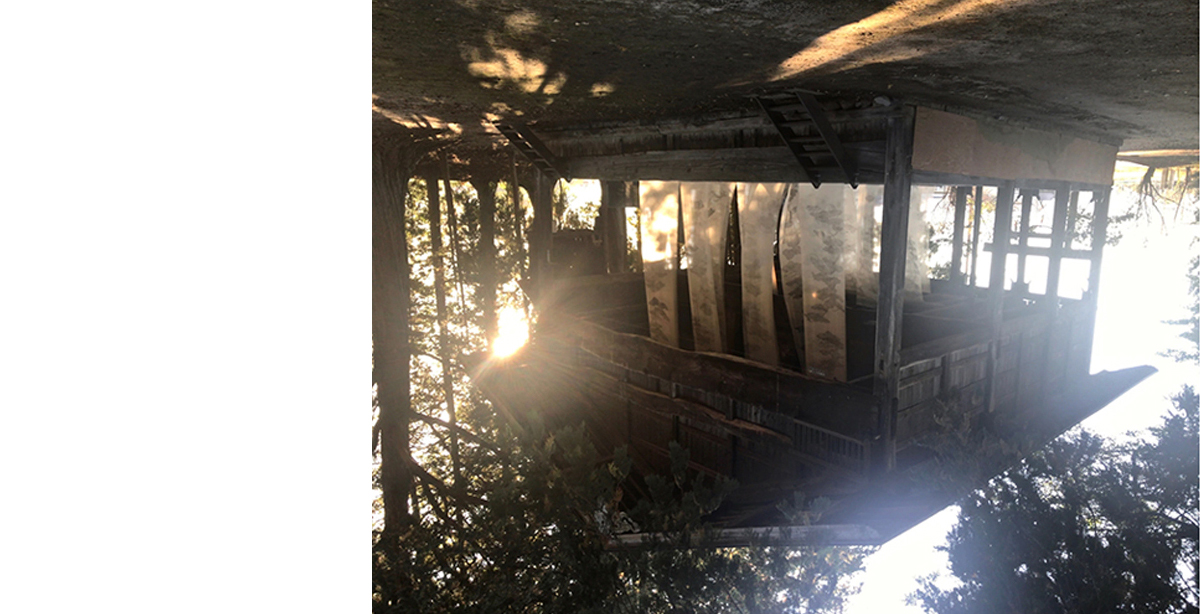
神楽殿に吊られた17 組の絹布には、大地とつながる“根の森”と、天空に流れる“雲海”を同時に感じさせるモチーフが木版画によって写し出され、その上から繊細な刺繍が施されている。それらは社叢から差しこむ光と風を受けて、周囲の豊かな自然を透かし込みながら軽やかに揺れる。
ウチとソトが曖昧な神楽殿は山の世界と人の世界が交わる場所であり、常世と現世の境界でもある。宮山は、夏から秋への移ろいと共に作品内部に映り込む風景を通して、日本では、自然こそが神様なのだと体感したという。
会期中には地元の例祭が行われ、作品の舞台に太鼓が鳴り響いた。北アルプス山脈と田園風景に囲まれた鎮守の森で、宮山の丁寧な仕事が、伝統的な空間に光を当て、見えないものを感知させる稀有な空間体験を創出した。
(北アルプス国際芸術祭カタログより引用)
神楽殿に吊られた17 組の絹布には、大地とつながる“根の森”と、天空に流れる“雲海”を同時に感じさせるモチーフが木版画によって写し出され、その上から繊細な刺繍が施されている。それらは社叢から差しこむ光と風を受けて、周囲の豊かな自然を透かし込みながら軽やかに揺れる。
ウチとソトが曖昧な神楽殿は山の世界と人の世界が交わる場所であり、常世と現世の境界でもある。宮山は、夏から秋への移ろいと共に作品内部に映り込む風景を通して、日本では、自然こそが神様なのだと体感したという。
会期中には地元の例祭が行われ、作品の舞台に太鼓が鳴り響いた。北アルプス山脈と田園風景に囲まれた鎮守の森で、宮山の丁寧な仕事が、伝統的な空間に光を当て、見えないものを感知させる稀有な空間体験を創出した。
(北アルプス国際芸術祭カタログより引用)
Appearing in the Sunuma shrine, dedicated to the deity of
Amaterasu Omikami (the Sun Goddess), The Roots of Heaven
was installation piece that expressed a position somewhere
between heaven and earth. It was the latest piece in a series
that began in the San Francesco Church, a Catholic institution
set behind sturdy walls in the Marche region of Italy.
The 17 silk cloths hung in the Kagura Hall were woodblock prints depicting motifs that evoked both a “forest of roots” connected to the earth and a “sea of clouds” in the sky, with delicate embroidery on top. They fluctuated gently in response to the light and the breeze filtering in from the grove around the shrine, allowing the rich natural surroundings to contribute to the effect. The Kagura Hall, a place where the distinction between inside and outside is indistinct, is a point of intersection for the worlds of mountains and of humans, and a boundary between the eternal world and reality. Miyayama explained that the shifting scenery reflected in the work through the transition between summer and autumn inspired in her the feeling that in Japan, nature itself is god.
During the exhibition period, a local festival took place, and the sound of drums echoed across the stage. In the sacred grove surrounded by the Northern Alps and rural landscape, the delicate work Miyayama created cast light on the traditional space, creating a spatial experience that provided viewers a glimpse into the invisible.
(From the Northern Alps Art Festival Catalog)
The 17 silk cloths hung in the Kagura Hall were woodblock prints depicting motifs that evoked both a “forest of roots” connected to the earth and a “sea of clouds” in the sky, with delicate embroidery on top. They fluctuated gently in response to the light and the breeze filtering in from the grove around the shrine, allowing the rich natural surroundings to contribute to the effect. The Kagura Hall, a place where the distinction between inside and outside is indistinct, is a point of intersection for the worlds of mountains and of humans, and a boundary between the eternal world and reality. Miyayama explained that the shifting scenery reflected in the work through the transition between summer and autumn inspired in her the feeling that in Japan, nature itself is god.
During the exhibition period, a local festival took place, and the sound of drums echoed across the stage. In the sacred grove surrounded by the Northern Alps and rural landscape, the delicate work Miyayama created cast light on the traditional space, creating a spatial experience that provided viewers a glimpse into the invisible.
(From the Northern Alps Art Festival Catalog)
作家の言葉
学生時代のアジア、そして長年にわたる欧州でのフィールドワークを経て、私は次の問いを抱くようになった。
「同じ風景を目の前にしながら、人はそれぞれ異なる世界を見ているのではないか」
人は空間をどのように認知し、どこに立ち、どの高さから世界を見ているのか。 私はこれまで、作品とそれを取り巻く時間・空間・鑑賞者とのあいだに生まれる対話を探究してきた。
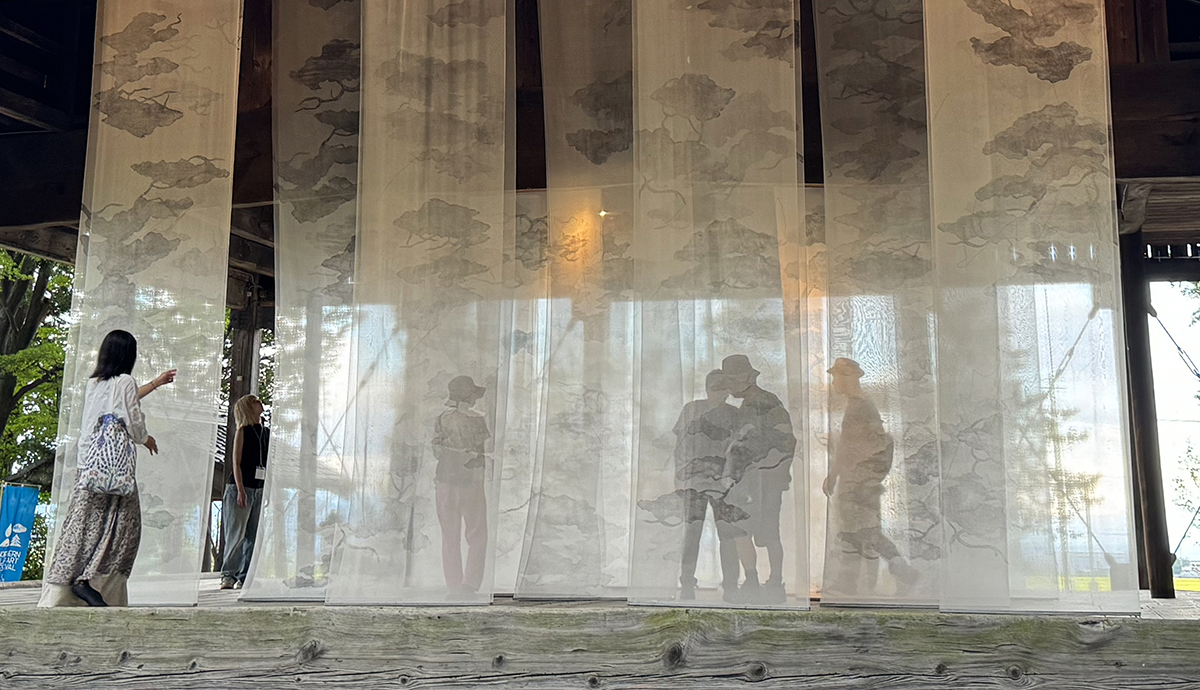
今回の展示でも、作品へのアプローチは鑑賞者によって大きく異なる。下方から見上げる人、周囲を歩きながら眺める人、舞台に上がる人、作品の内部に入り込む人。光や風を全身に受けながら、空間の体感と視線の変化が生まれていく。 私にとって作品とは、場所と身体が交差することで立ち上がる「関係の出来事」でもある。
展示期間中には秋の例大祭が行われ、神楽殿でのコラボレーションが実現した。普段は静かな神社が、この日ばかりは神を迎える場として息づき始める。神様をお迎えする準備の段階から地域の人々に混ざり、神事を参与観察する機会を得た。
前夜祭では、響岳太鼓の演奏者たちが即興で作品のあいだをすり抜け、舞台装置のように空間を使いこなした。夜から翌日の神事にかけて、舞台は獅子面と作品が向き合う対話の場へと変化していく。獅子舞の中で踊る若者が不足し、近年は面だけが舞台に奉納されていること、そして落雷を受けながら再生した神木の逸話など、神社にまつわる記憶も語られた。
(下へつづく)
学生時代のアジア、そして長年にわたる欧州でのフィールドワークを経て、私は次の問いを抱くようになった。
「同じ風景を目の前にしながら、人はそれぞれ異なる世界を見ているのではないか」
人は空間をどのように認知し、どこに立ち、どの高さから世界を見ているのか。 私はこれまで、作品とそれを取り巻く時間・空間・鑑賞者とのあいだに生まれる対話を探究してきた。
今回の展示でも、作品へのアプローチは鑑賞者によって大きく異なる。下方から見上げる人、周囲を歩きながら眺める人、舞台に上がる人、作品の内部に入り込む人。光や風を全身に受けながら、空間の体感と視線の変化が生まれていく。 私にとって作品とは、場所と身体が交差することで立ち上がる「関係の出来事」でもある。
展示期間中には秋の例大祭が行われ、神楽殿でのコラボレーションが実現した。普段は静かな神社が、この日ばかりは神を迎える場として息づき始める。神様をお迎えする準備の段階から地域の人々に混ざり、神事を参与観察する機会を得た。
前夜祭では、響岳太鼓の演奏者たちが即興で作品のあいだをすり抜け、舞台装置のように空間を使いこなした。夜から翌日の神事にかけて、舞台は獅子面と作品が向き合う対話の場へと変化していく。獅子舞の中で踊る若者が不足し、近年は面だけが舞台に奉納されていること、そして落雷を受けながら再生した神木の逸話など、神社にまつわる記憶も語られた。
(下へつづく)
Artist Statement
Through fieldwork conducted in Asia during my student years and through many years of research in Europe, I began to ask the following question:
Do people see different worlds even when they stand before the same landscape?
How do we perceive space?
Where do we stand, and from what height do we look at the world?
My work explores the dialogue that emerges between the artwork and the time, space, and viewers surrounding it.
In this installation, each viewer approaches the work differently. Some look up from below, others walk around it, step onto the stage, or even enter the interior space. As they encounter light and wind with their whole bodies, shifts in spatial perception and viewpoint begin to occur. For me, an artwork is a relational event that emerges where place and body intersect.
During the exhibition period, the shrine’s annual autumn festival took place, leading to an unexpected collaboration within the kagura stage. A shrine that is usually quiet came alive as a place prepared to welcome the deity. From the preparations onward, I joined the local community and participated in observing the rituals.
On the eve of the festival, performers from Kyogaku Taiko moved improvisationally through the installation, using the space almost like a stage set. From the night into the following day’s rituals, the stage gradually transformed into a place of dialogue between the artwork and the lion masks used in the traditional dance. Local stories also surfaced: the lack of young dancers in recent years has led to the masks themselves being offered on stage, and there were accounts of the shrine’s sacred tree that survived and regenerated after being struck by lightning.
(Continued below)
Through fieldwork conducted in Asia during my student years and through many years of research in Europe, I began to ask the following question:
Do people see different worlds even when they stand before the same landscape?
How do we perceive space?
Where do we stand, and from what height do we look at the world?
My work explores the dialogue that emerges between the artwork and the time, space, and viewers surrounding it.
In this installation, each viewer approaches the work differently. Some look up from below, others walk around it, step onto the stage, or even enter the interior space. As they encounter light and wind with their whole bodies, shifts in spatial perception and viewpoint begin to occur. For me, an artwork is a relational event that emerges where place and body intersect.
During the exhibition period, the shrine’s annual autumn festival took place, leading to an unexpected collaboration within the kagura stage. A shrine that is usually quiet came alive as a place prepared to welcome the deity. From the preparations onward, I joined the local community and participated in observing the rituals.
On the eve of the festival, performers from Kyogaku Taiko moved improvisationally through the installation, using the space almost like a stage set. From the night into the following day’s rituals, the stage gradually transformed into a place of dialogue between the artwork and the lion masks used in the traditional dance. Local stories also surfaced: the lack of young dancers in recent years has led to the masks themselves being offered on stage, and there were accounts of the shrine’s sacred tree that survived and regenerated after being struck by lightning.
(Continued below)
例大祭 Local Festival 4-5th October 2024
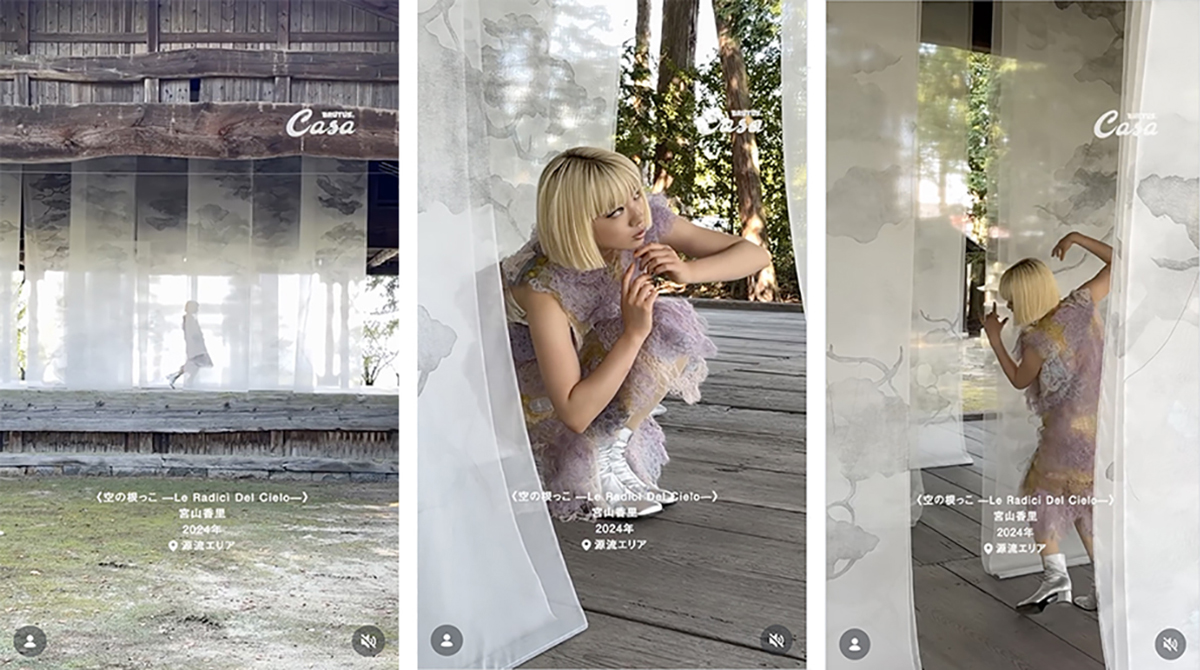
その後も多くの鑑賞者が舞台上で作品と主体的に関わり、献茶や身体表現、映像撮影など多様な行為が生まれた。ここが神と人の接点となる場であることも、儀礼的行為を促したのかもしれない。記録された行為はメディアを通して循環し、そこに居合わせなかった私自身がそれを知る契機ともなった。鑑賞者は単なる受け手にとどまらず、作品を更新する主体、そして表現者となっていった。
股覗きの視線からのナラティブ、献茶という身体的な所作、そして神楽殿という祭事空間。それらに共通しているのは、境界に立つ身体と視線である。人は境界に立つことで、世界の向こう側を垣間見る。
作品を取り巻く光、空間、時間、身体は互いに影響し合い、意味は固定されることなく編み直され続ける。 空間は静的な三次元の器ではなく、時間や記憶、行為が重層的に交差する動的な構造として現れている。その実践を通して、単一の視点には還元されない、多層的で多次元的な世界のあり方が立ち現れるのかもしれない。
この「移ろうあいだ」を通して、私はそれぞれの人が作品の向こう側に見ている風景を、ふと垣間見ることができた。
股覗きの視線からのナラティブ、献茶という身体的な所作、そして神楽殿という祭事空間。それらに共通しているのは、境界に立つ身体と視線である。人は境界に立つことで、世界の向こう側を垣間見る。
作品を取り巻く光、空間、時間、身体は互いに影響し合い、意味は固定されることなく編み直され続ける。 空間は静的な三次元の器ではなく、時間や記憶、行為が重層的に交差する動的な構造として現れている。その実践を通して、単一の視点には還元されない、多層的で多次元的な世界のあり方が立ち現れるのかもしれない。
この「移ろうあいだ」を通して、私はそれぞれの人が作品の向こう側に見ている風景を、ふと垣間見ることができた。
Afterwards, many visitors continued to engage with the work on the stage. Tea offerings, bodily expressions, and video recordings emerged as diverse actions. Perhaps the space itself — where the human and the divine meet — invited such ritual actions. These actions circulated through media, allowing even me—who was not present at every moment—to encounter them afterward. Viewers thus became not only recipients but also participants who renewed the work and became, in a sense, creators themselves.
The narratives emerging from the Mata-nozoki(inverted perception) Gaze, the embodied gesture of tea offering, and the ritual space of the kagura stage all share a common condition: a body and gaze standing at the threshold. By standing at such a boundary, one may glimpse what lies beyond.
Light, space, time, and the body continuously influence one another around the work, and meaning is constantly rewritten rather than fixed. Space appears not as a static three-dimensional container but as a dynamic structure where time, memory, and human actions intersect in layers. Through this practice, it may become possible to experience a world that cannot be reduced to a single viewpoint—a world that is layered and multidimensional.
Through these shifting intervals, I felt that I could momentarily glimpse the landscapes that each person sees beyond the artwork.
The narratives emerging from the Mata-nozoki(inverted perception) Gaze, the embodied gesture of tea offering, and the ritual space of the kagura stage all share a common condition: a body and gaze standing at the threshold. By standing at such a boundary, one may glimpse what lies beyond.
Light, space, time, and the body continuously influence one another around the work, and meaning is constantly rewritten rather than fixed. Space appears not as a static three-dimensional container but as a dynamic structure where time, memory, and human actions intersect in layers. Through this practice, it may become possible to experience a world that cannot be reduced to a single viewpoint—a world that is layered and multidimensional.
Through these shifting intervals, I felt that I could momentarily glimpse the landscapes that each person sees beyond the artwork.
Casa BRUTUS 見逃せない秋のアート100 パフォーマンス byアオイヤマダ
Performance by AOI YAMADA
ʒиN 13 : 股覗き MATANOZOKIより
写真と文 早稲田大学教授 鴻野わか菜
Photo Essay by Prof.Wakana KONO
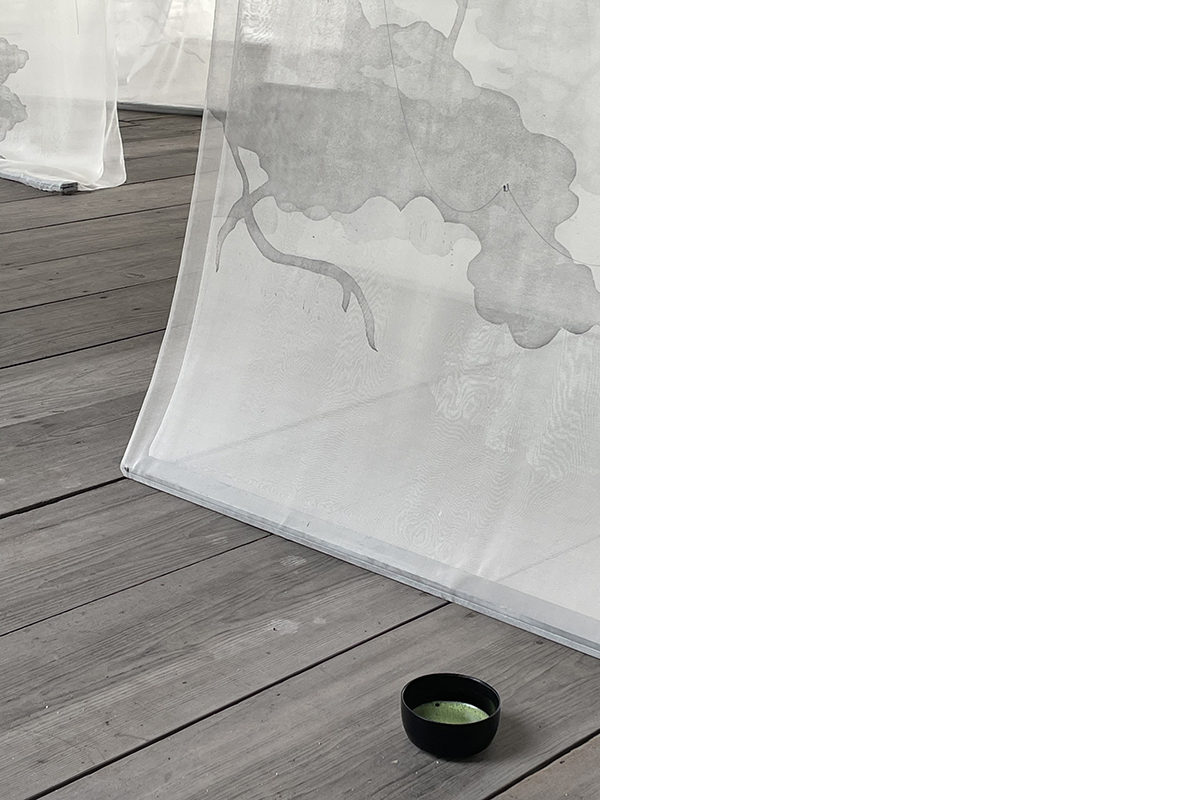
武者小路千家 茶道教授 傳田妙京による献茶
Ritual tea offering by Myokyo Denda
install 設置作業